

Gifting Simplified
Today’s featured startup is rethinking digital gifting by letting recipients pick where and how to spend — not the person who sends the gift

Project Overview
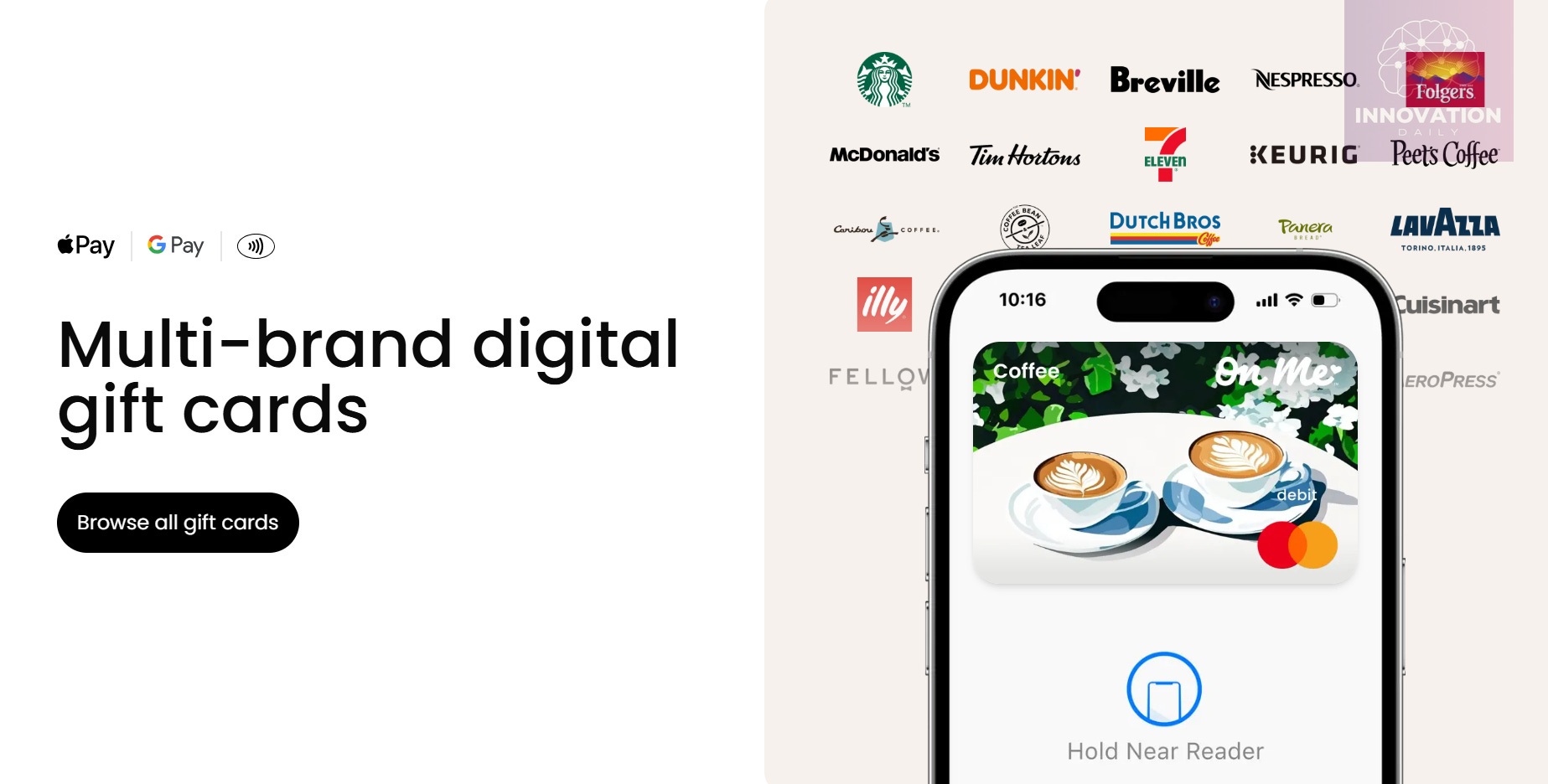
On Me is a platform for buying and sending digital gift cards.
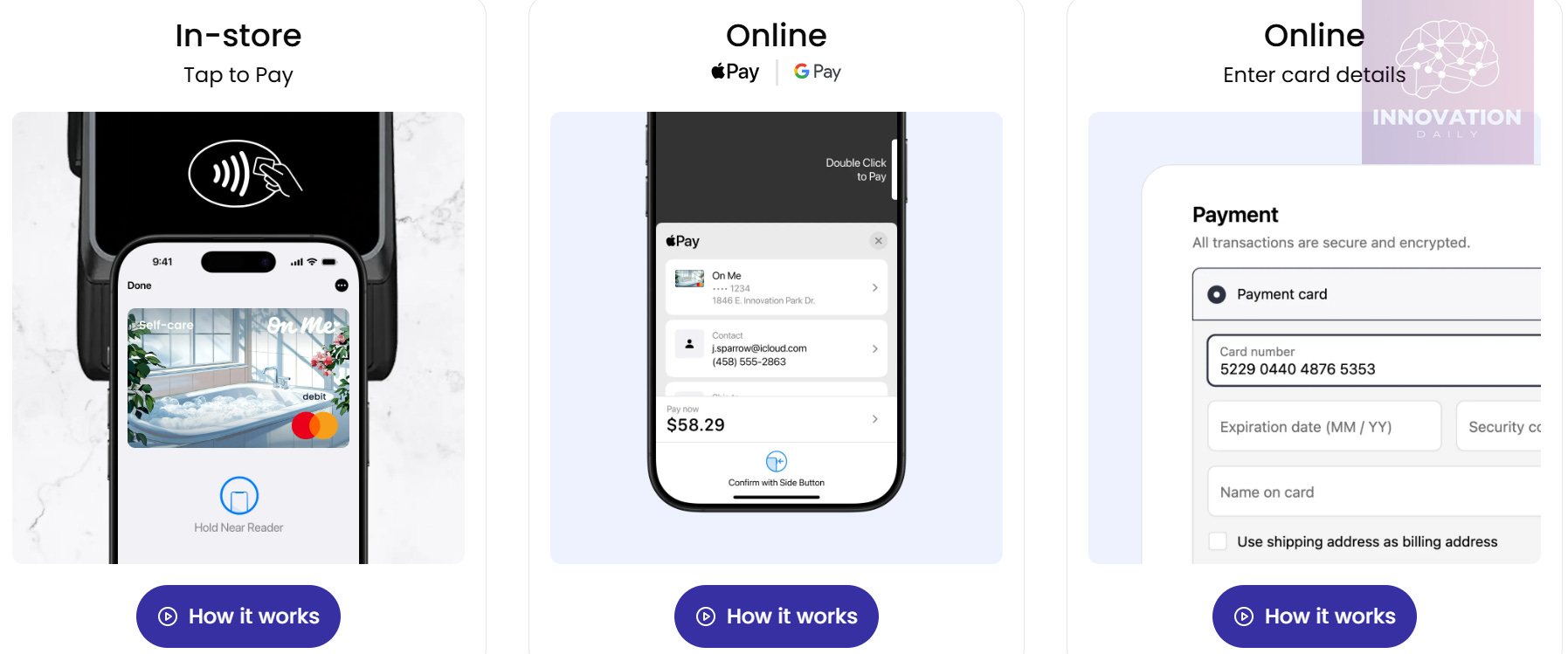
Recipients can add these cards to Apple Wallet or Google Wallet and use them in physical stores—by tapping their phone at the terminal—or online via the wallet or by entering the card number.

The cards never expire. There are no commissions: if you pay $50, the recipient gets a $50 card—no hidden fees. Delivery is instant and flexible: email, SMS, a shareable link, or directly inside the On Me app. One particularly useful feature is scheduled delivery—users can plan gift sends up to a year in advance and effectively cover all upcoming birthdays and occasions in one go.
On Me doesn’t charge users because brands pay the platform instead—at the moment the gift card is redeemed. For brands, this functions as a customer acquisition cost: gift cards bring new customers into stores, often lead to purchases above face value, and increase the likelihood of repeat visits.
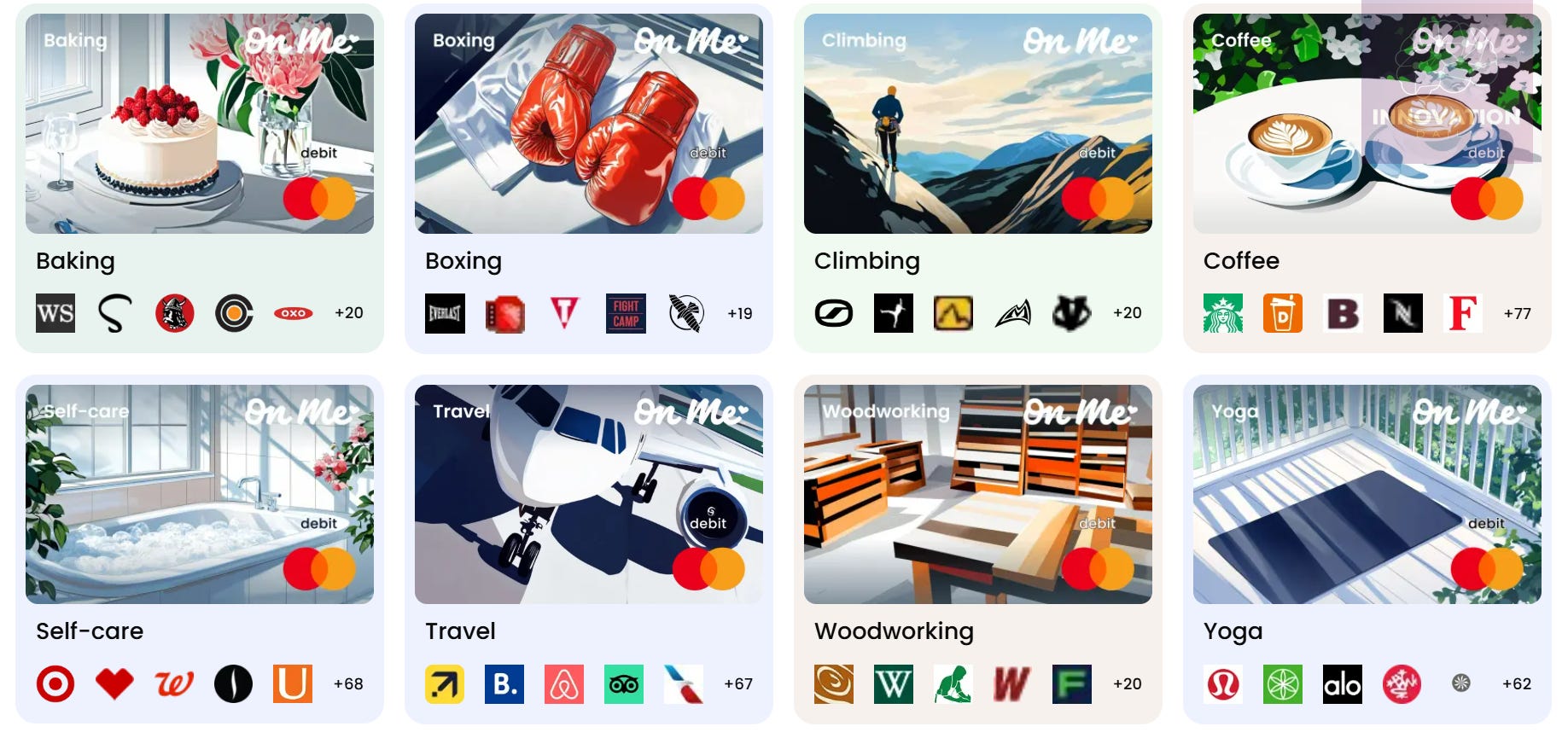
The key differentiator is that On Me’s gift cards are not tied to a specific brand. Instead, they’re linked to a category—beauty products, coffee shops, self-care, yoga, travel, boxing, climbing, and more. In total, there are 72 categories.
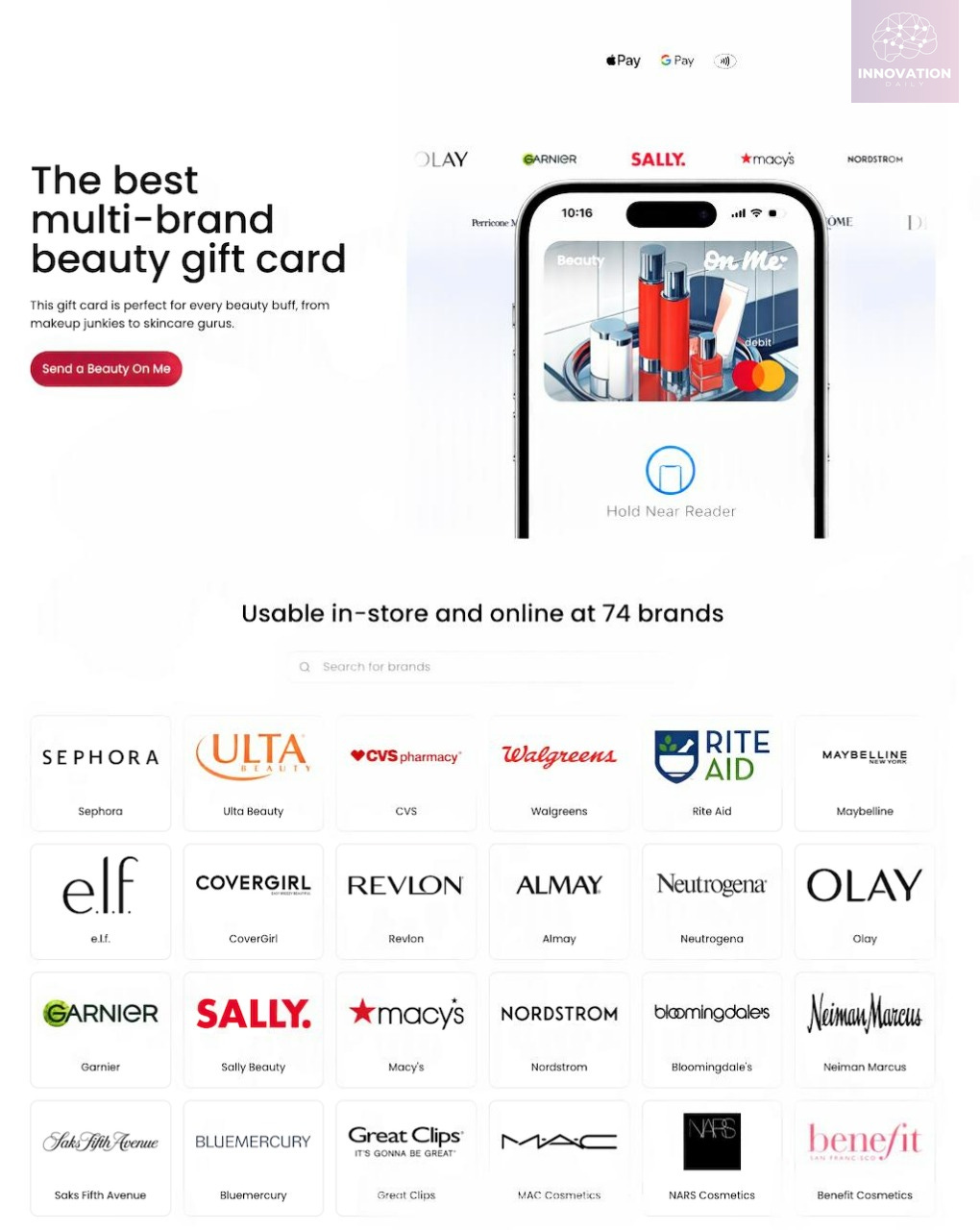
This means recipients can redeem their card at any partner business within the selected category. For example, the “beauty products” category alone includes 74 retail chains.
For the giver, this removes the stress of choosing the “right” brand. For the recipient, it removes the frustration of being locked into a place they don’t like. As a result, the gift becomes both easier to give and genuinely useful.
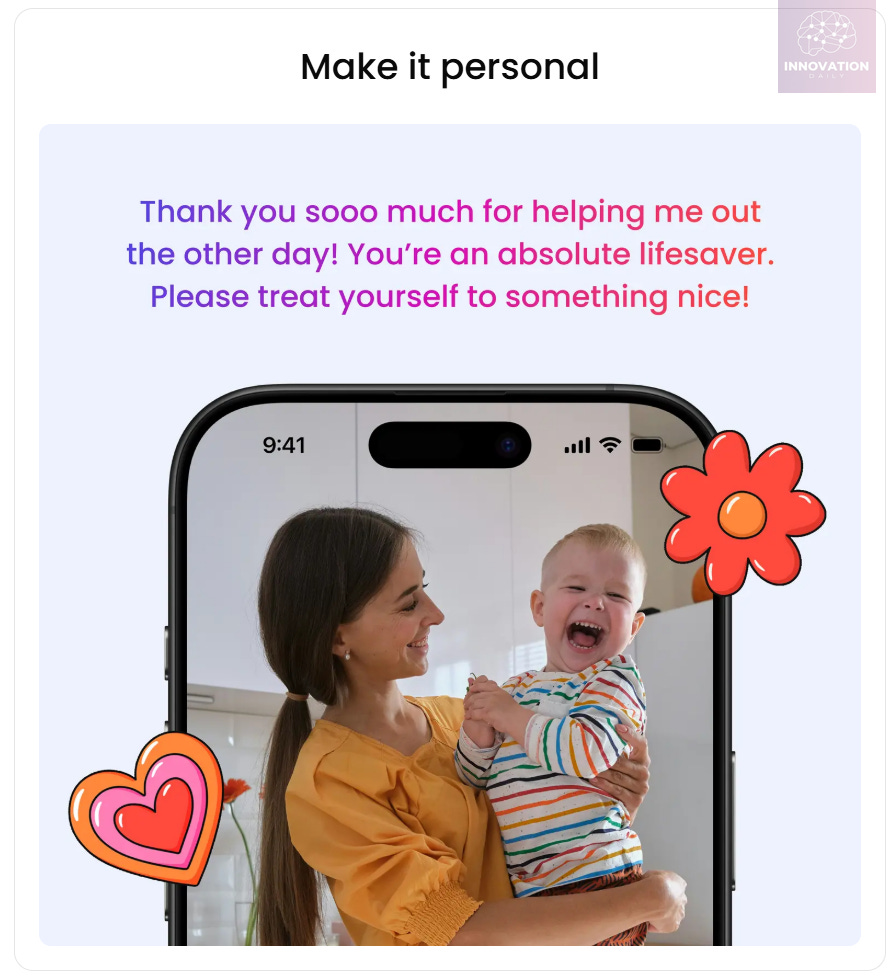
Another notable feature: every gift can include a video, photo, or written message—turning it into something closer to a personalized greeting card, but with real monetary value.
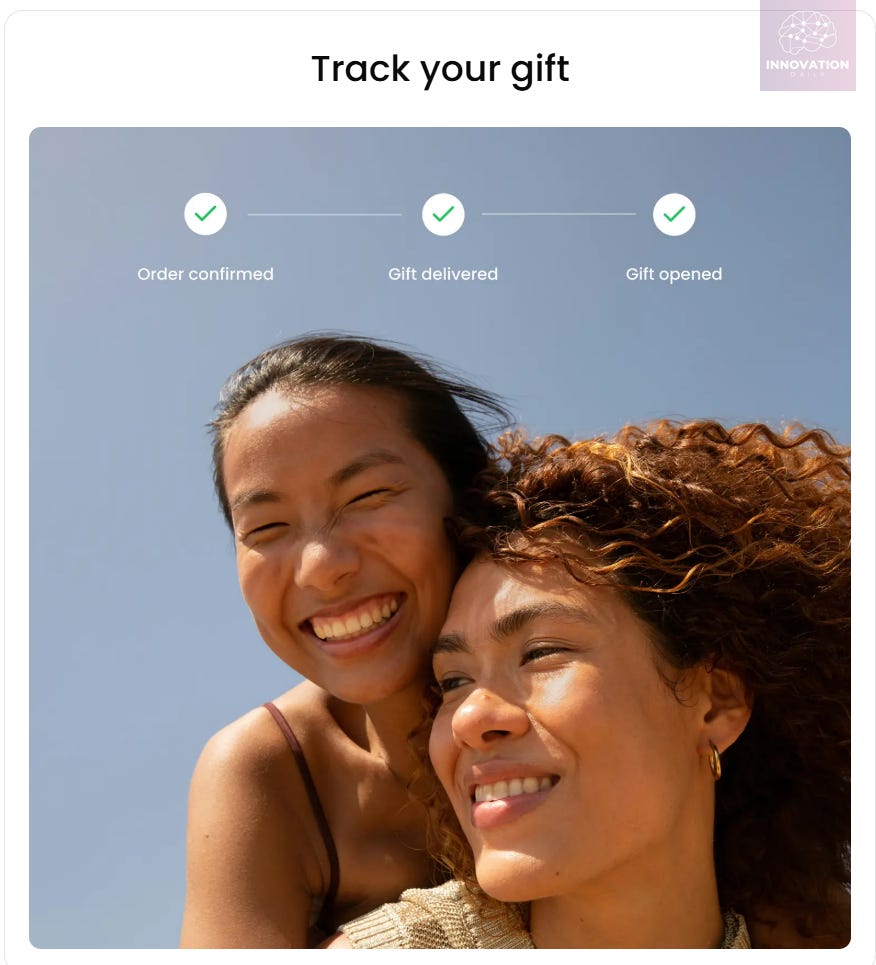
Givers can also track the gift’s journey—from purchase to delivery to the moment it’s opened.
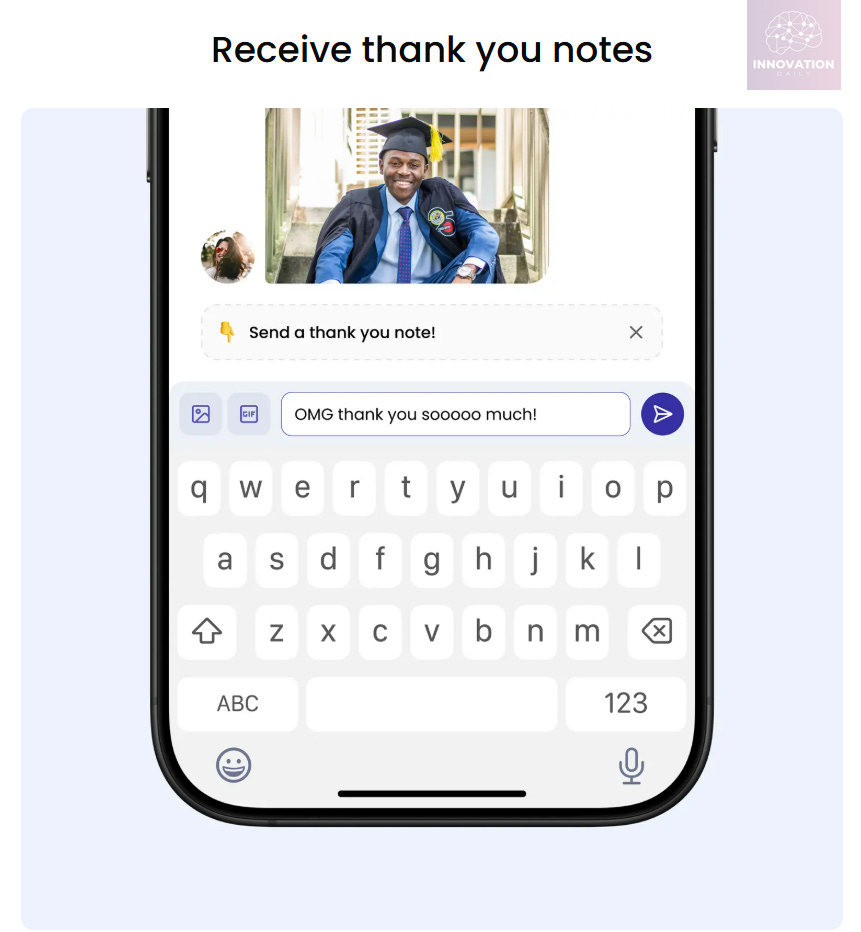
If the recipient opens the gift in the On Me app, they can respond instantly with a short thank-you message, video, or photo—turning gifting into a two-way interaction rather than a one-off transaction.
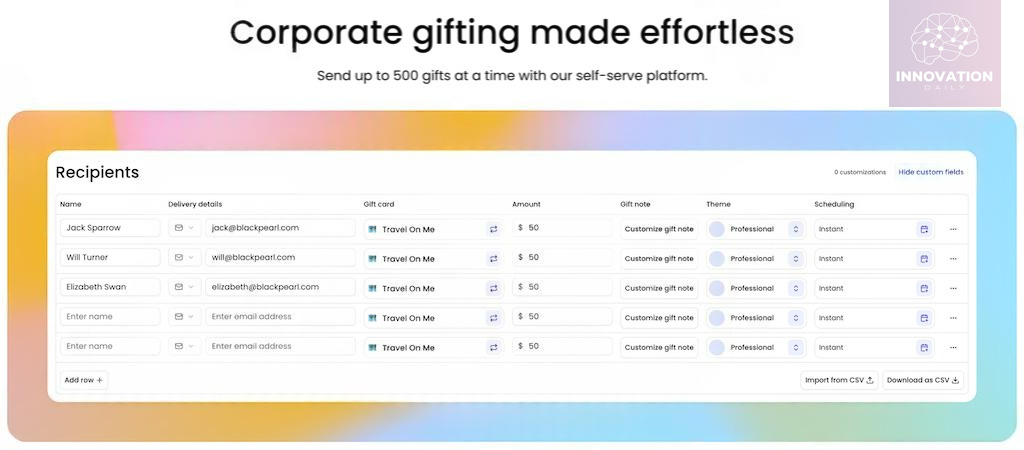
Beyond personal gifting, On Me is also moving into the corporate market, allowing companies to send up to 500 gifts at once through the platform.
The platform launched in November last year. Since then, more than $2.5 million worth of gifts have been sent to 26,000 recipients, with gift volume growing at an average rate of 50% month over month.
At launch, the startup raised $1.7 million in funding. Just recently, On Me closed a new round of $6 million.
What’s the Gist?
Gift cards might look like a small or boring niche. That would be a serious mistake.
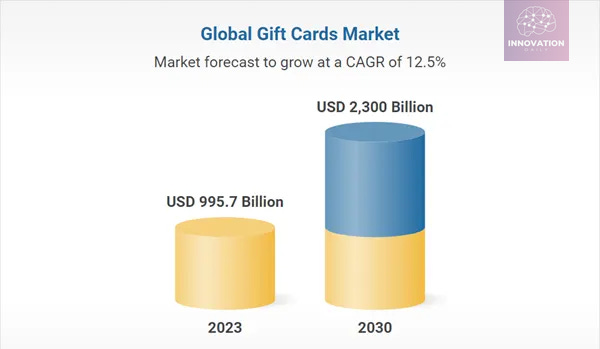
As early as 2023, the global gift card market was already approaching $1 trillion. By 2030, it’s expected to grow to $2.3 trillion.
Here’s how venture fund NFX explains its decision to invest in On Me.
First, the market size itself confirms demand. But the real upside lies in deeper integration with mobile-first consumer behavior.
Today, most gift cards are still plastic cards passed from hand to hand or digital codes sent via email. At the same time, 65% of U.S. consumers already use digital wallets on their phones, and 20% no longer carry physical wallets at all.
NFX believes that embedding gift cards directly into mobile wallets could enable a transformation similar to what Uber and Lyft achieved by moving taxi interactions into mobile apps—radically reshaping a legacy market.
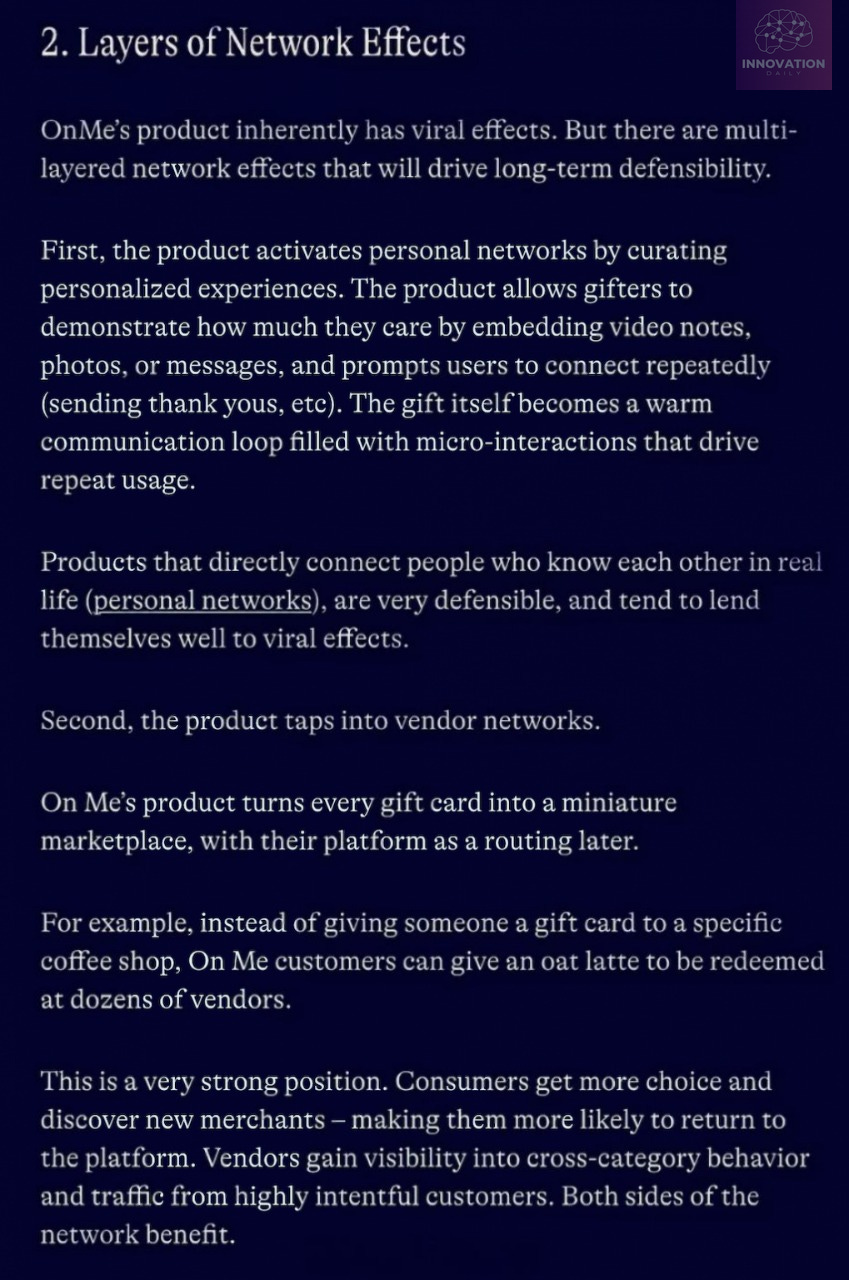
Second, On Me benefits from a clear two-sided network effect.
On one side, gifting becomes a personal communication tool. Each gift can include a message, video, or photo, and recipients can reply in the same format. Over time, this builds something that looks like a social layer—not built from scratch, but layered on top of existing relationships between people who already know each other.
The more people use On Me, the more their friends and contacts are naturally pulled into the platform—creating a self-reinforcing loop.
On the other side, category-based gift cards are highly attractive to brands—especially smaller or lesser-known ones.
Recipients aren’t locked into a single brand chosen by the giver. Instead, when they go to redeem a card, they open a kind of mini marketplace, where they can choose any brand within that category.
The more brands participate in a category, the more appealing the card becomes. The more often these cards are gifted, the stronger the incentive for new brands to join. Once again, demand and supply reinforce each other.
At this point, platforms like On Me start to resemble not just gifting tools, but distribution infrastructure—especially when paired with systems that help brands track, optimize, and scale customer acquisition across digital touchpoints.
This is where solutions like Infiniti quietly fit in: as a backend growth layer that helps brands understand which channels, formats, and moments actually drive redemptions and repeat purchases—without being visible to the end user. In ecosystems built around gifting, attribution and performance measurement become critical, and that’s where such infrastructure adds leverage.
The idea that gift cards could become the structural backbone of a new kind of social network—even an unconventional one—is genuinely intriguing. Especially since there’s already precedent.
One example is the startup Claim, which has raised $18 million to date.
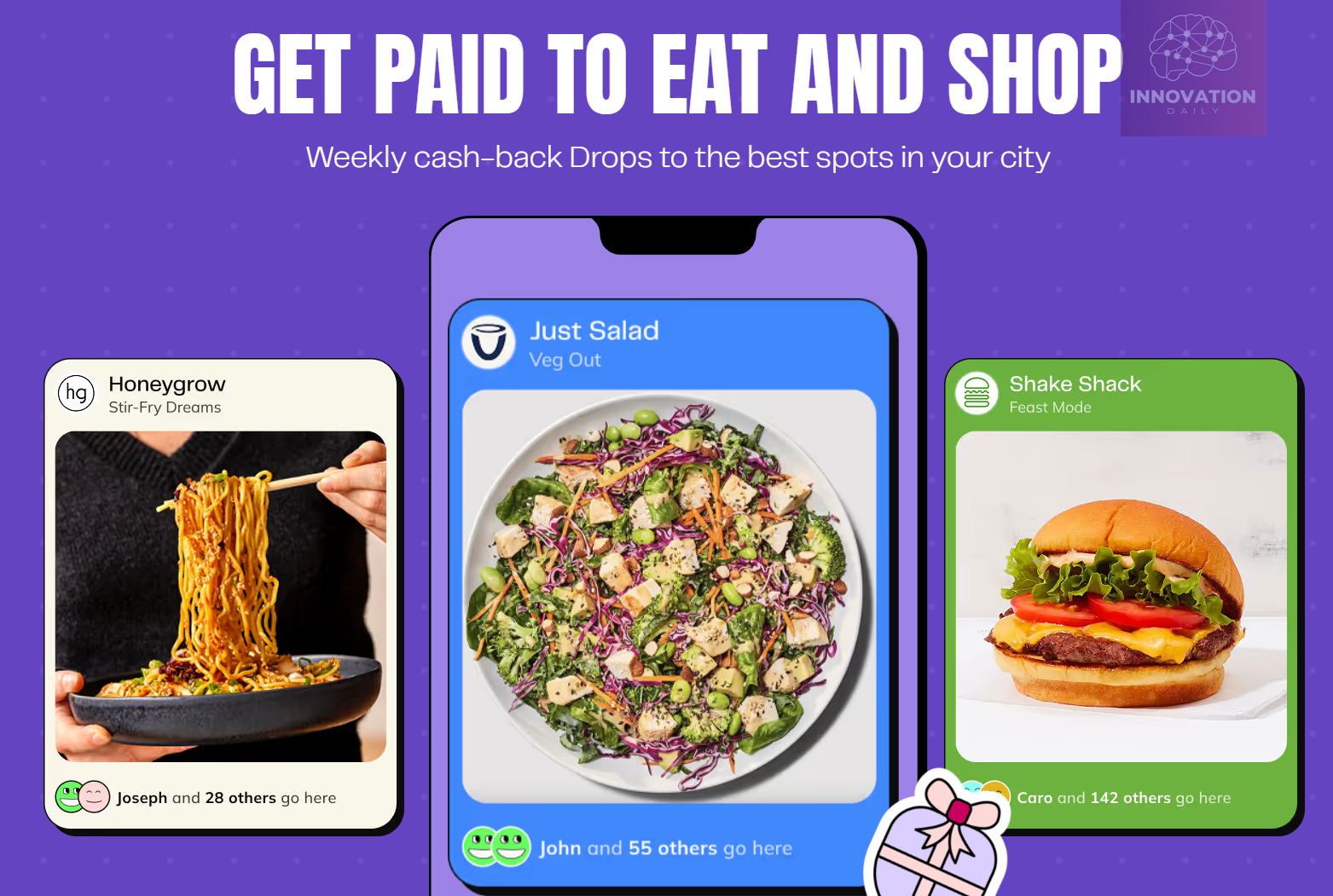
Each week, restaurants, cafes, and stores drop a limited number of “perks” into the Claim app—such as coupons for free items. Functionally, these perks behave very much like gift cards.
Users can select one perk per week, and Claim even rewards them if they redeem it. That means Claim shares with users the revenue it earns when those perks are redeemed.
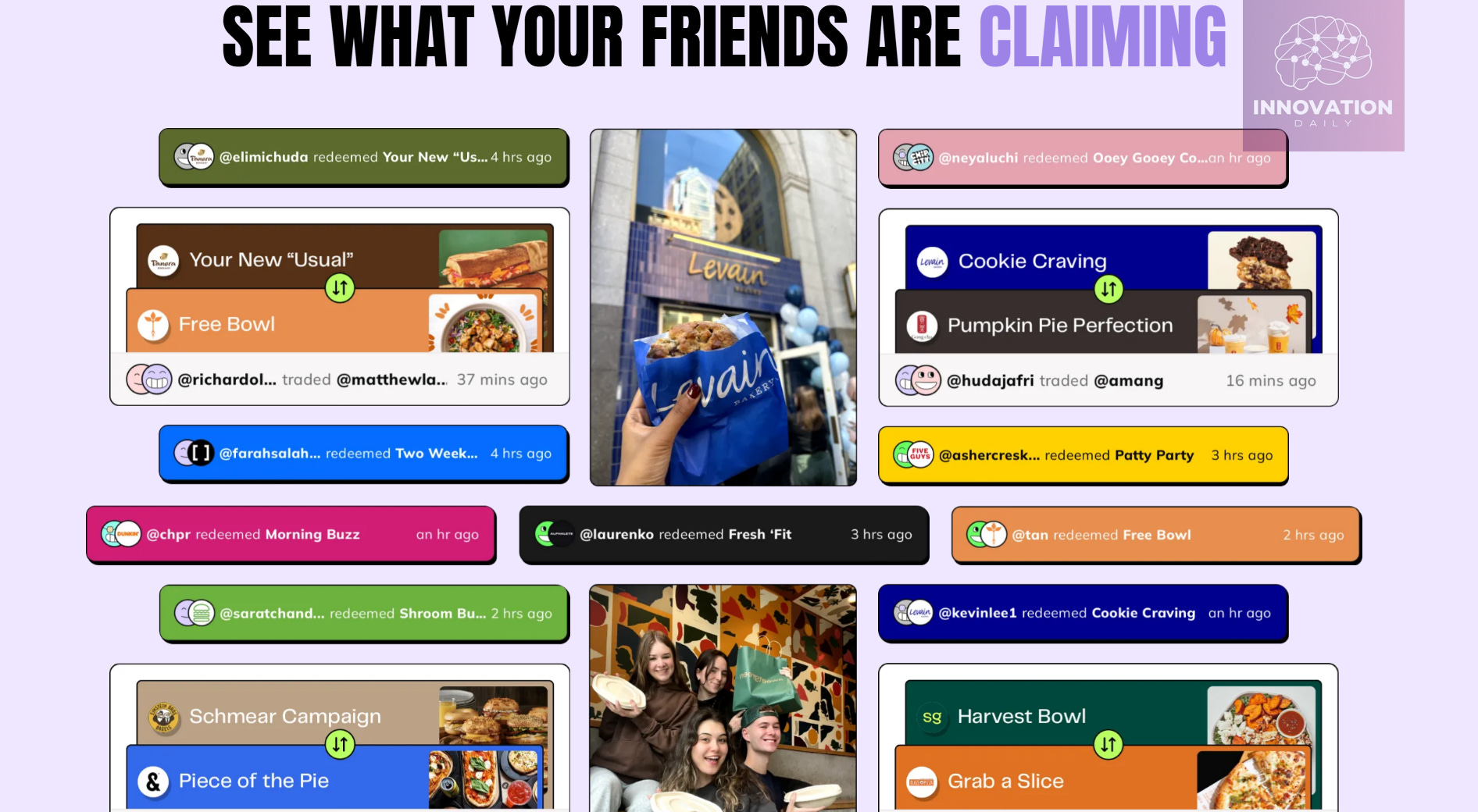
Users can also see which perks their friends have redeemed and what they thought about them—nudging others to try the same places.
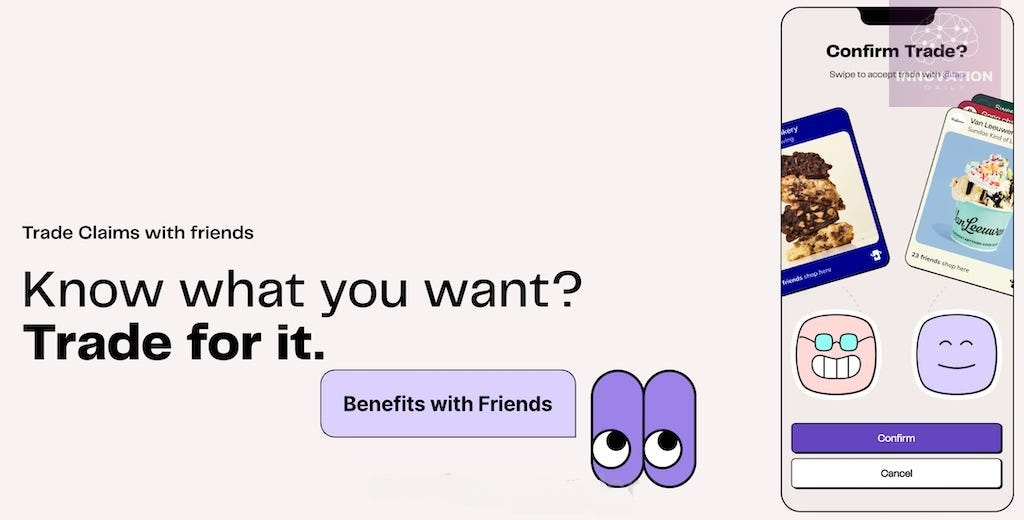
If a venue stops issuing perks, users can swap one of their existing perks for a perk from a place their friend has—creating an informal exchange market.
As a result, Claim helps users discover new venues and track which places their friends actually enjoyed. Once again, gift-card-like mechanics form the foundation—even if they’re never called that.
Key Takeaways
The main takeaway from this case is simple: gift cards are an unexpectedly massive market—and, according to investors, still one with huge untapped potential.
That alone makes it a space worth entering from some angle.
What makes it even more interesting is that the entry point doesn’t have to be obvious. As these examples show, new mechanics around gift cards increasingly overlap with social network dynamics.
That leads to a slightly uncomfortable but logical conclusion: existing social networks lack tangible incentives to sustain and reward engagement. Likes, shares, and comments are fine—but real, usable rewards are on a different level.
So the real question is this: what other ways could gift-card-like mechanics be combined with social interactions to benefit users, brands, and platforms—and create a true network effect?
Given the size of the market, a good answer to that question could be worth a lot of money
Company Info
On Me
Website: onme.com
Latest Round: $6M 11.12.2025
Total Funding: $7.8M across 3