

Results Beat Tools Every Time
Today's featured startup is built around one idea: founders don’t need more software — they need customers, fast

Project Overview

Catalyne tells startups to stop wasting 40+ hours a month chasing leads that will never buy.
Instead, the company offers a very concrete promise: identify 25 ideal customers and launch 75 outbound campaigns designed to find more lookalike prospects — all in just 14 days.
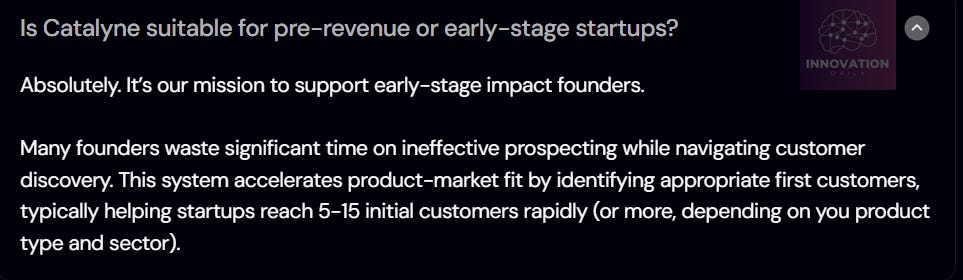
Catalyne’s core audience is early-stage startups that are simultaneously trying to find product–market fit and make their first sales. In practice, these teams often move painfully slowly: lots of effort, little traction, and constant exhaustion.
Importantly, Catalyne doesn’t argue that startups should separate discovery from sales. Quite the opposite. Finding PMF and selling should happen in parallel. The problem begins when founders try to solve both — without structure, data, or leverage.
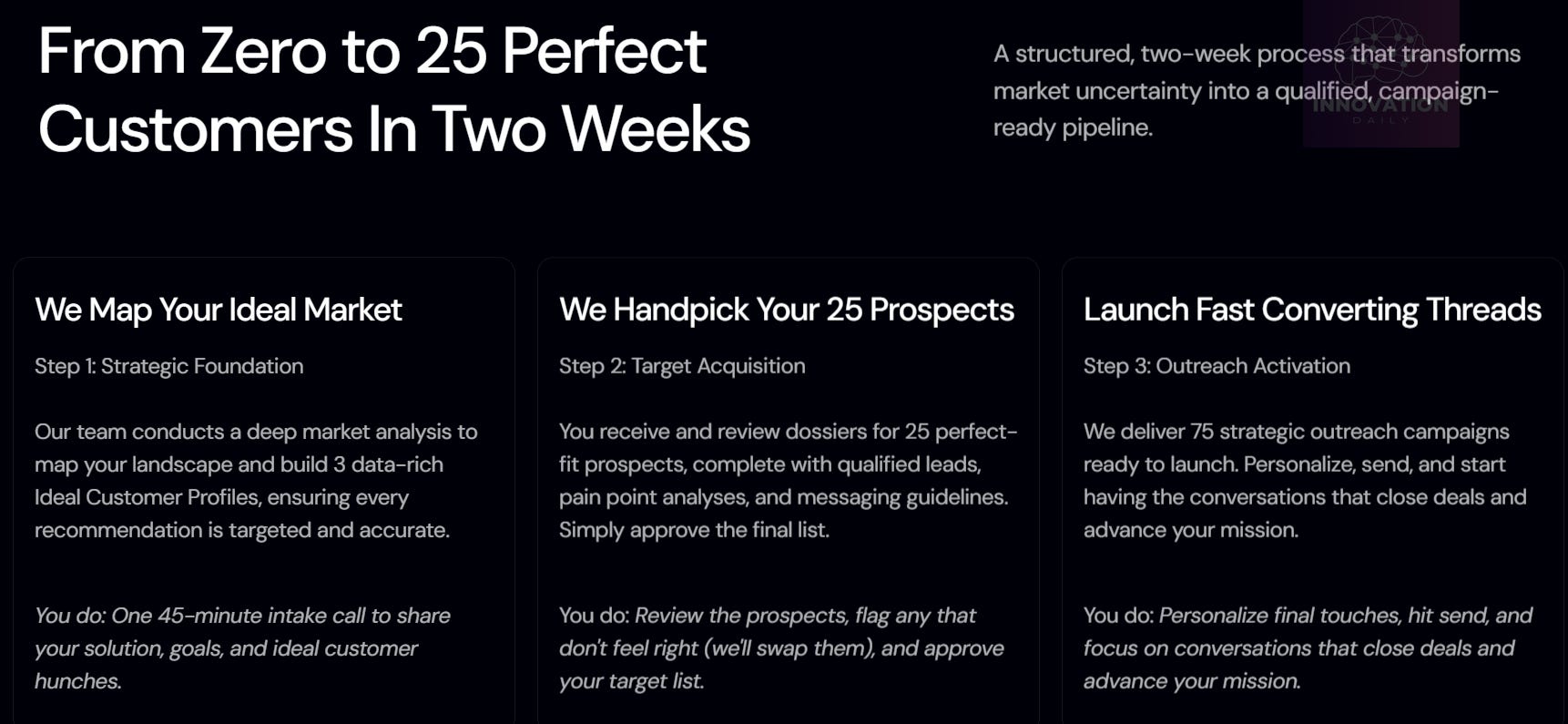
Catalyne’s process consists of three stages, with one clear outcome: helping startups move from zero to their first 25 customers in two weeks.
It starts with a 45-minute discovery call. The team dives into the product, goals, and any early assumptions about ideal customers. Based on this, Catalyne runs deep market research and comes back with three fully formed ideal customer profiles, which the startup reviews and approves.
Next, Catalyne delivers a detailed dossier of 25 target companies matching those profiles. Each includes pain points worth addressing, specific contacts to reach out to, and draft messaging tailored to grab attention. Again, everything is validated by the startup before moving forward.
Finally, Catalyne builds 75 high-conversion outbound message sequences aimed at these 25 companies and similar prospects. These sequences are almost turnkey: the startup only needs to personalize a few details, send them out, and focus on replying and closing conversations.
Behind the scenes, this isn’t done manually. Market research, ICP modeling, company selection, dossier creation, and outbound copy are all powered by Catalyne’s own AI system. Humans step in to verify, refine, and improve the output.
This is where Catalyne sharply differs from traditional consultants and marketing agencies. Classic consulting firms charge $10,000–$50,000 for market research that takes 6–12 weeks. Marketing agencies charge $5,000–$15,000 per month to run campaigns.
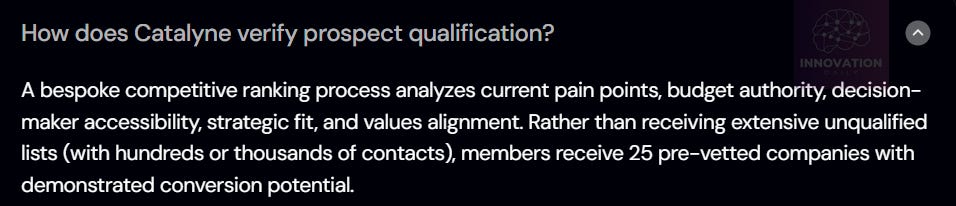
Catalyne bundles both into a single offer, delivers results in 14 days, and claims to charge only a fraction of those budgets. Pricing varies by market, but realistically lands somewhere between a few thousand and $5,000–$7,000.
According to the company, this approach has already been tested on hundreds of startups from leading European accelerators — not surprising, given Catalyne’s German roots.
Just before the New Year, Catalyne raised $31 million in its first crowdfunding round. Quite possibly from the same startups that saw real value in what the company offers.
What’s the Gist?
One fascinating detail: Catalyne’s website still links to its old homepage, which reveals how dramatically its positioning evolved during fundraising.
The underlying concept hasn’t changed much. From the beginning, Catalyne focused on deep market research, defining ideal customers, and building outbound messaging.
What did change was the delivery model.
Originally, Catalyne planned to sell a self-serve platform that automated these tasks. The core message was something like: “Automate everything to grow faster.” Useful, sure — but not exactly compelling.
Today, Catalyne has shifted the entire outcome into its own hands. The platform still exists internally, but externally the company sells a result, not a tool.
The new promise — “25 ideal customers and 75 campaigns in 14 days” — is far more concrete. It’s also, unsurprisingly, an order of magnitude more expensive than a typical AI SaaS subscription.
In effect, Catalyne has repositioned itself from a DIY platform into an AI-powered agency that delivers ready-made outcomes — built using the same technology it once tried to sell directly.
And this isn’t an isolated case. It’s part of a broader, clearly emerging trend.
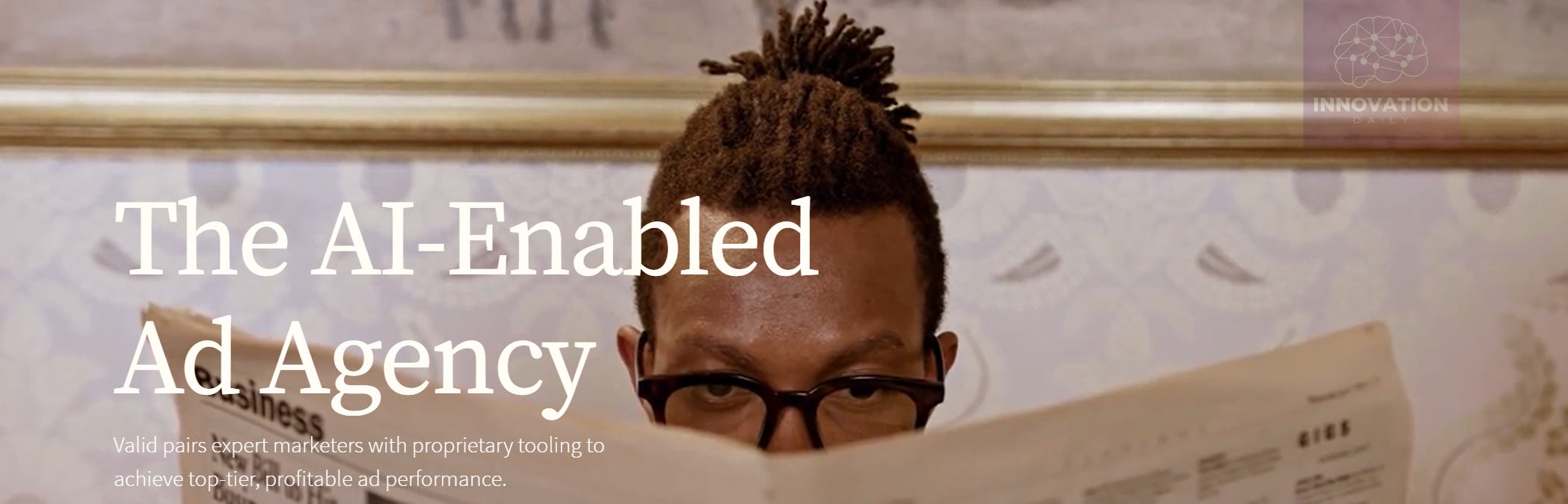
Valid followed a similar path, moving from platform to AI ad agency. After raising $1.8M for the platform, it secured $5.5M once it pivoted to an agency model.
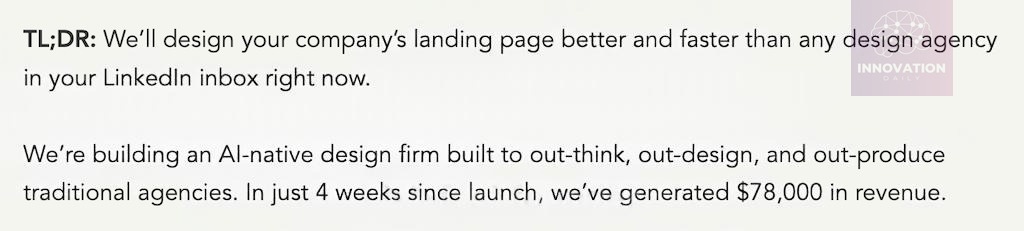
Semiotic, a YC graduate, launched an AI agency that builds landing pages for startups — generating $78,000 in revenue within four weeks.
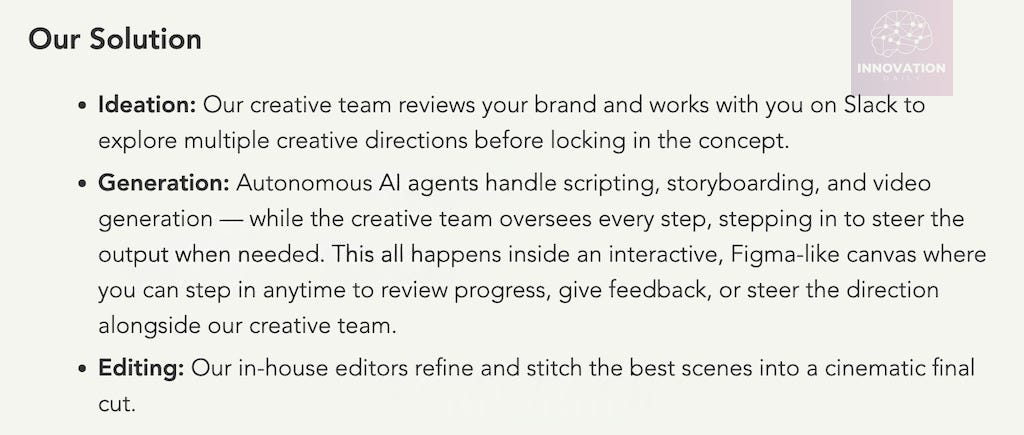
Absurd, also from YC, turned AI into an agency producing launch videos for new startups and products.
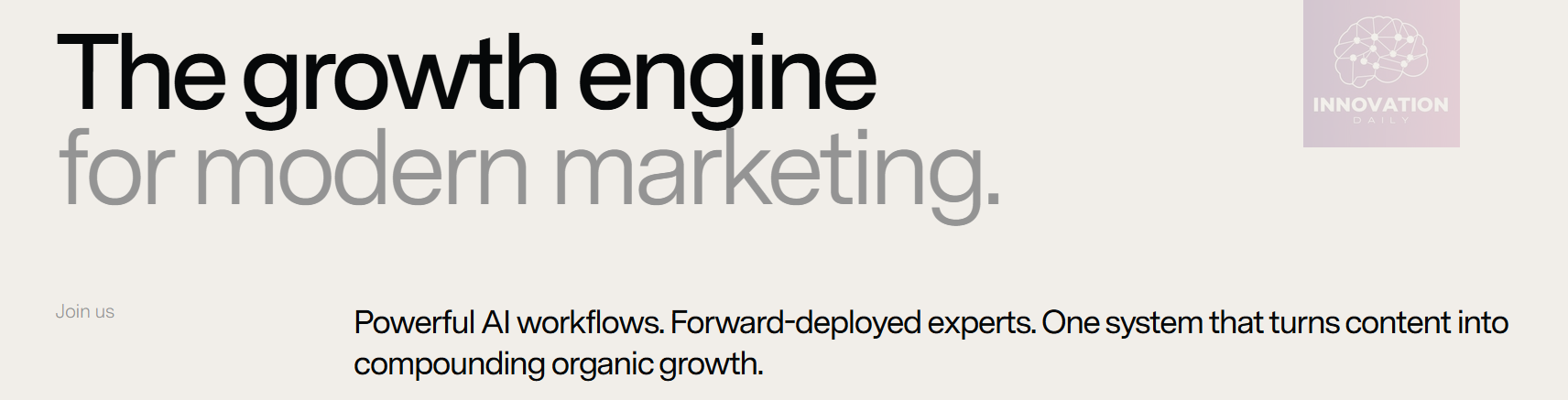
GrowthX built an AI-powered marketing agency focused on SEO and acquisition content. In under a year, it grew from zero to $7M in projected ARR, became profitable early, and raised $15M in its first round.
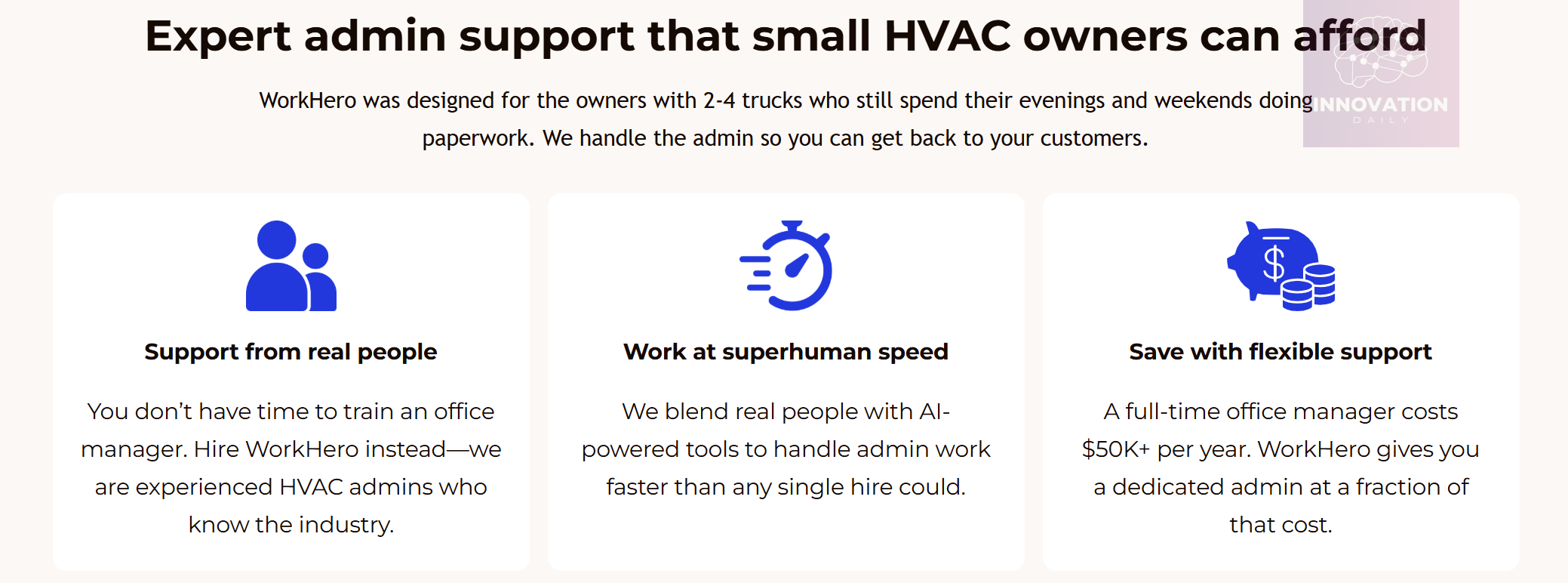
Even more unexpectedly, WorkHero raised $5M for a service providing office managers to small HVAC companies. The twist? These “people” work using an internal AI platform, delivering near-superhuman speed at accessible prices.
Key Takeaways
A clear pattern is forming.
Yes, companies can now buy AI platforms and automate complex workflows themselves. But at the same time, AI agencies are emerging that do the same work — faster, cheaper, and with less friction.
Why does this work? Because companies have always cared about results, not processes.
Previously, doing things in-house via software was cheaper than hiring agencies, which were slow and expensive. AI flipped that equation. Once agencies adopted AI, they became both faster and more affordable — making delegation attractive again.
In other words, businesses don’t want tooling. They want outcomes.
And when outcomes can be delivered quickly and at a reasonable price, most teams will happily outsource — instead of hiring, training, managing, and absorbing all the hidden costs that never show up in a SaaS subscription.
AI agencies can operate cheaper for the same reason mass-produced cars are cheaper than custom builds. This is their core business. Their workflows are optimized end-to-end, structured like a conveyor belt, and benefit from economies of scale.
The real trend here is the rise of AI-powered production lines — compact, highly optimized agencies that take over tasks companies used to handle internally.
So the real question is:
Which repeatable, high-friction task could you turn into an AI conveyor belt — and build your own AI agency around it?
Company Info
Catalyne
Website: thecatalyne.com
Last round: $31M 30.12.2025
Total funding: no info