

The Cost of Ignoring Design
Today’s featured startup explores why functional software isn’t enough — and what happens when interface quality is handled by default

Project Overview
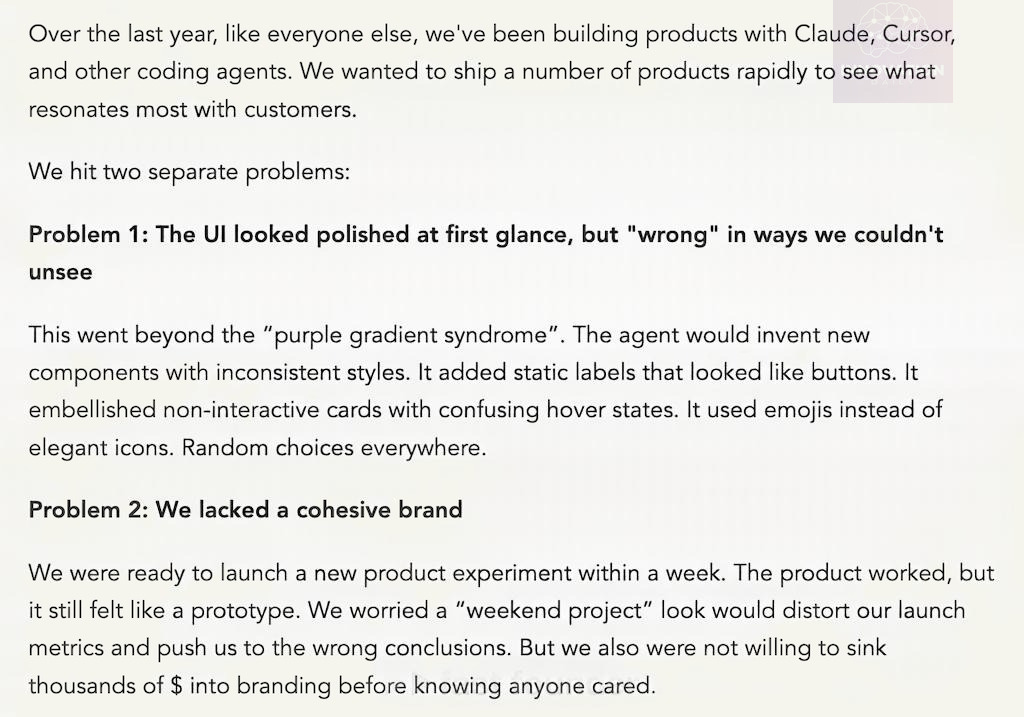
Over the past year, the founders of today’s startup have been building their products using Claude and Cursor. Along the way, they kept running into two persistent problems.
The first issue was that these AI tools could generate perfectly functional code — but not a proper user interface. The same UI elements would look different across screens. An AI might generate static text that looked like a button, or a button that looked like plain text. Instead of icons, it could randomly insert emojis. In short, the visual layer of the interface felt like a collection of arbitrary decisions made by the AI.
The second issue was that AI-generated products tended to look like developer-made prototypes. But a real product differs from a prototype not only by having fewer bugs — it also has a polished, cohesive interface built around a deliberate and recognizable style. At the same time, investing time and money into a full brand book and UI refinement at the MVP stage is simply too early.
That’s why the founders decided to build Design Rails — an “AI-native” brand system that enables consistent, pre-defined user interfaces inside products generated by AI platforms.
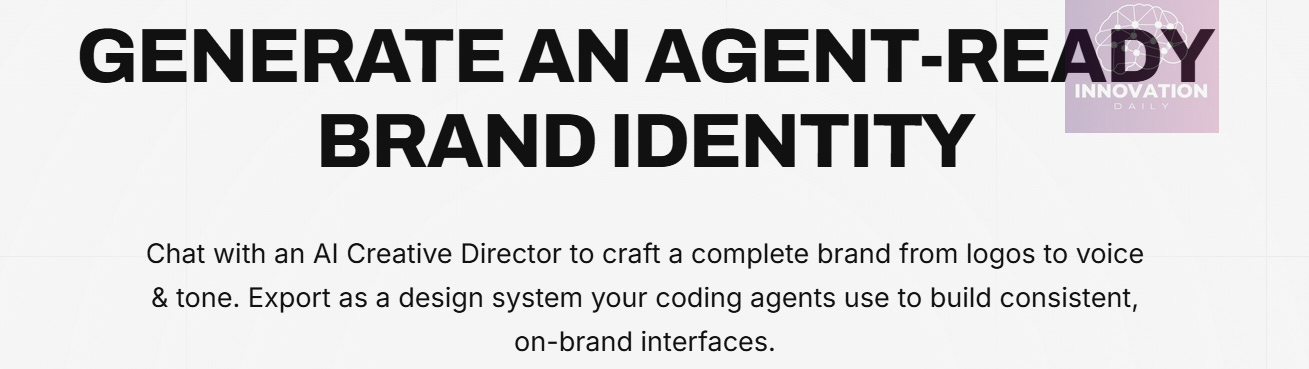
At its core, Design Rails acts as a creative AI director. Based on a textual description, it can generate a complete brand book — from logos to the “tone and voice” a product should use when communicating with users.
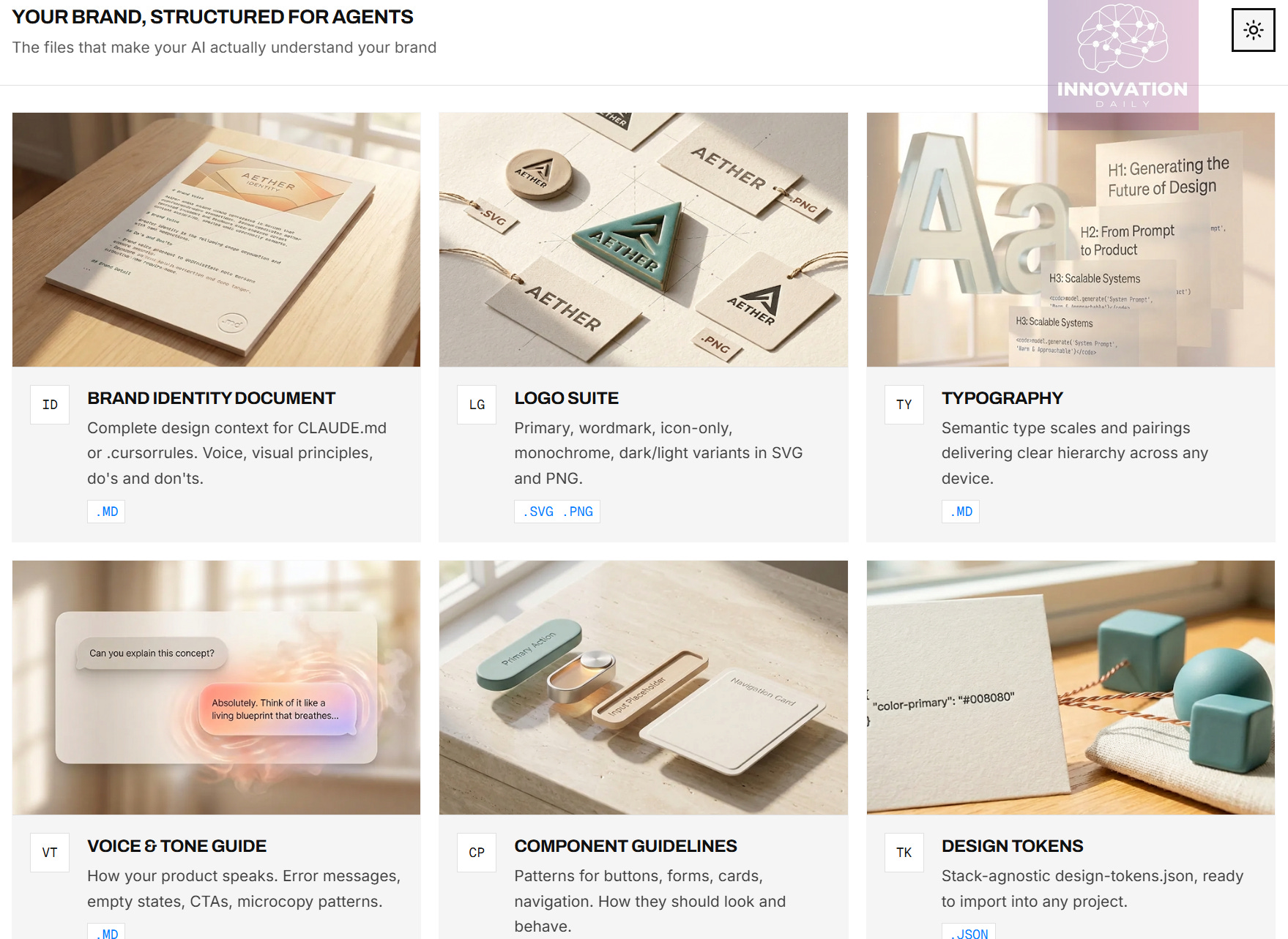
Design Rails generates several types of files:
Brand identity description — visual UI principles, tone and voice, what the interface can include and what it must avoid. This text is inserted into
CLAUDE.mdor.cursorsrulesso AI tools follow it.Logo sets in multiple formats and color variations, for example, for light and dark modes.
Typography guidelines, also provided as
.mdfiles.Tone & voice guidelines, including rules for microcopy, error messages, CTAs, and more — again as
.mdfiles.UI component guidelines describing how interface elements should look and behave during interaction.
A list of key design tokens, such as color codes, provided in JSON format.
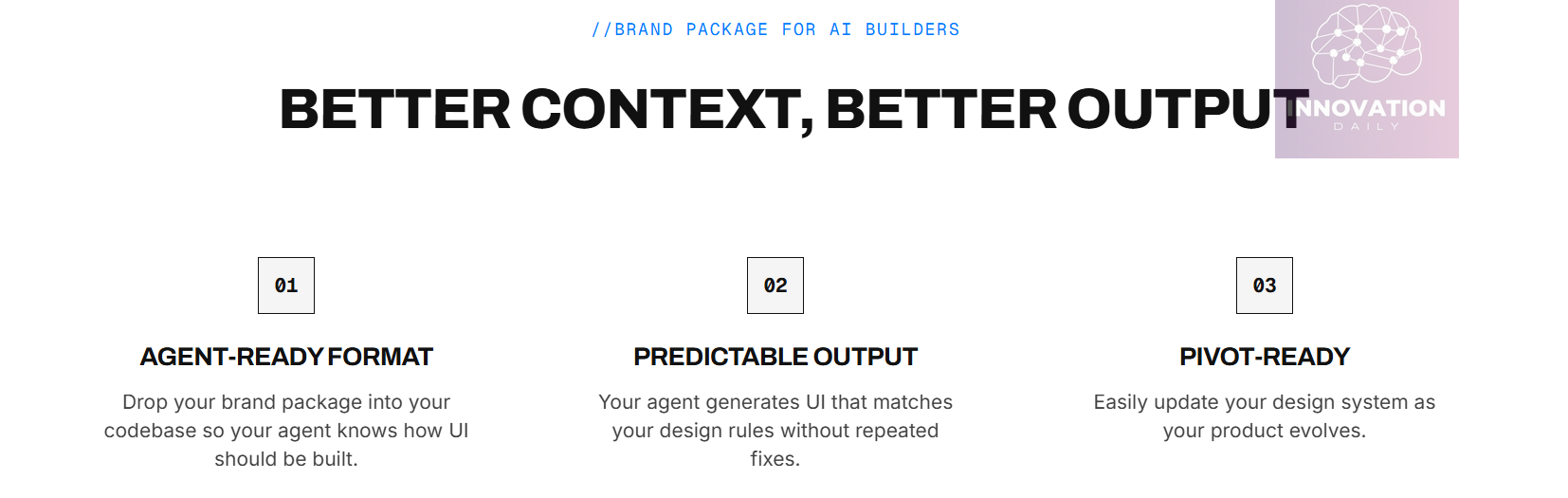
Once generated, these files are added to the product repository. From that point on, the AI tool uses them during every development iteration. If certain rules or UI elements stop working for the team, developers can ask Design Rails to regenerate the brand book with updated inputs and simply replace the old files.
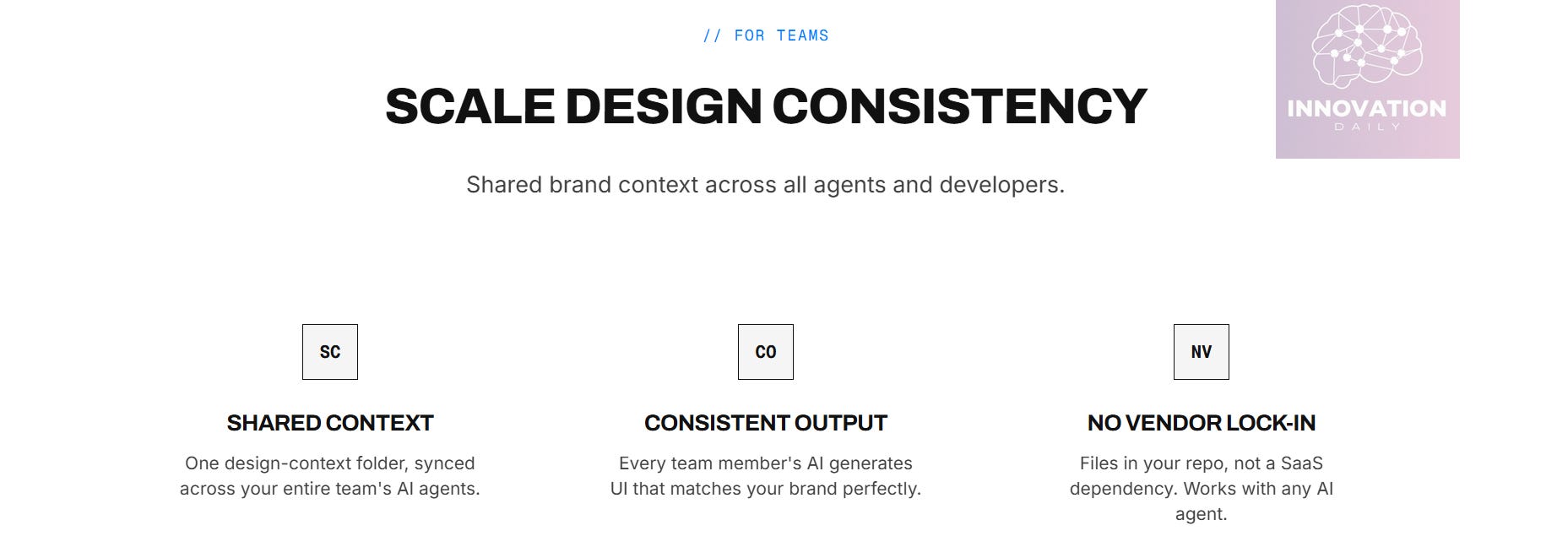
If a product is built by a team, Design Rails synchronizes the generated or regenerated brand book across all developers. As a result, code generated by different team members always comes with the same interface — without anyone having to explain anything to anyone.
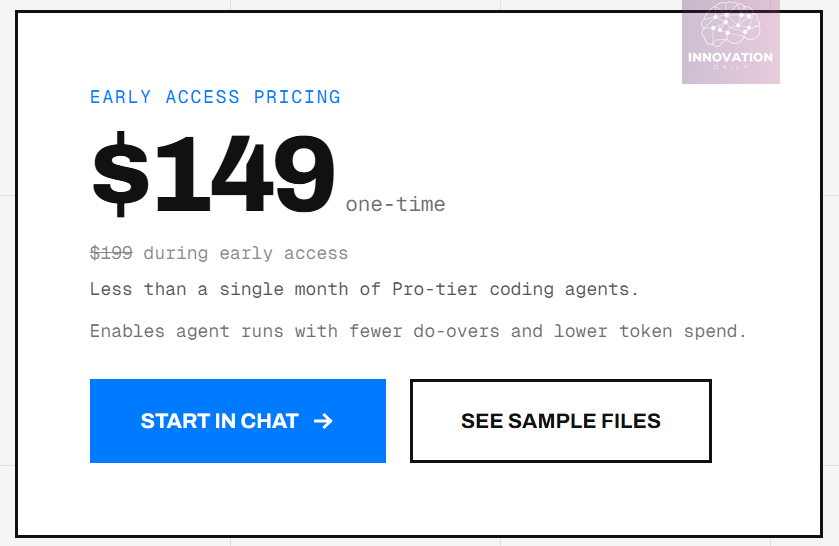
Pricing for early users is a one-time payment of $149.
The founders of Design Rails went through Y Combinator in 2022, which is why they announced the platform’s launch on the YC website yesterday.
What’s the Gist?
The founders behind Design Rails have been working in branding for a long time. In the past, they built Brand.ai, a platform for managing brand assets, which they sold to inVision in 2017. They then worked at inVision until 2022.

That same year, they entered Y Combinator with Chordio — an AI platform that analyzed product interfaces and generated recommendations on how to improve them.
Now they’ve built Design Rails, which essentially makes Chordio unnecessary. The goal of Design Rails is to ensure that every AI-generated product immediately comes with a decent, cohesive, brand-consistent user interface. And there are two interesting ideas behind this.
The first is that the most progressive way to evolve a product is when a new version “negates” the old one — pushing it to an entirely new level.
The dumbest example here is Gillette razors, where every iteration added more blades. At this point, there are five of them, I think. Each time, even if not explicitly stated, the message was clear: older razors with fewer blades are now basically trash.
The second idea is that problems are better prevented than solved. In that sense, Design Rails prevents the very problems Chordio was designed to clean up.
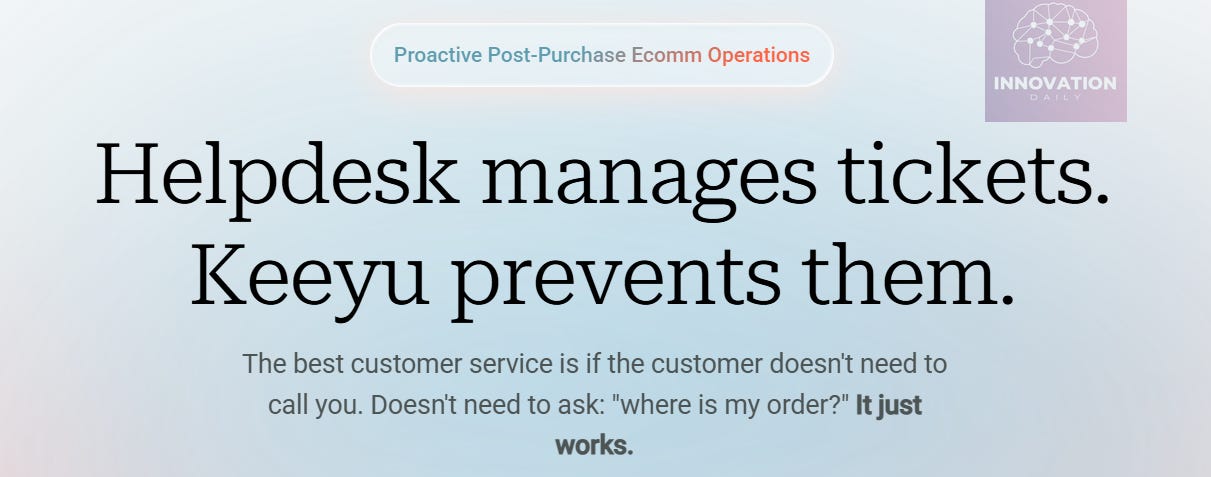
This is similar to another startup, Keeyu, which raised $1.5 million in November for its e-commerce customer service platform. Keeyu follows the same philosophy: its goal isn’t to handle customer complaints — it’s to prevent them.
Keeyu’s AI monitors the entire order journey, all the way until the package reaches the customer. If it detects delays or errors, it proactively notifies the customer — for example, explaining why delivery is delayed and what’s already being done to fix it.
As a result, the number of “Where is my order?” emails dropped by 90% among Keeyu’s customers. At the same time, repeat purchases increased by 10%, because customers appreciated that the store acknowledged issues proactively.
I’ve already pointed out this paradoxical way of increasing customer loyalty in my review of Ajust. Ajust built a platform that lets consumers use AI to file complaints with companies about poor service or product quality.
Ajust noticed something surprising: when a company acknowledged the mistake, apologized, and offered compensation, the customer’s NPS score jumped by 4–5 points on average.
And if a company notices the issue itself, apologizes, and compensates the customer before any complaint is made — loyalty should increase even more.
Key Takeaways
What I find most important about Design Rails is that it follows a powerful principle of AI product design, captured in a tweet from last year that I still love.
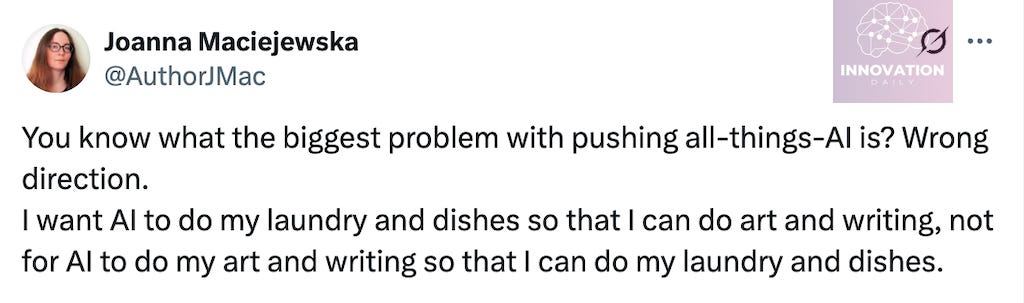
“You know what the biggest problem with AI products is? They’re moving in the wrong direction,” says an author and artist. “I want AI to do my laundry and wash the dishes while I write books and draw paintings. I don’t want AI to write books and draw paintings while I’m doing the laundry and washing dishes.”
In other words, most startups try to use AI to automate the most important part of a person’s work. But the real opportunity lies in doing the opposite — automating the unimportant tasks.
People naturally dislike unimportant tasks. And they’re happy to pay for someone — or something — else to take care of them.
From this perspective, UI design is not the most important thing in a programmer’s life. Deep down, developers know it matters to users — but they struggle to give it the same attention as coding. So an AI system that you configure once, and that then automatically enforces this “unimportant” thing for you — that’s exactly what developers are willing to pay for.
The broader direction here is clear: building AI platforms that automate “unimportant” tasks. Tasks that may not be critical for the target audience, but are still important enough to be followed — as long as people don’t have to spend much time or effort on them themselves, and can instead pay for automation.
So what are the “unimportant” tasks you’re forced to deal with? What about people around you, in completely different roles? Would you — or they — pay for those things to just happen automatically?
If yes, that’s something worth automating.
Company Info
Design Rails
Website: designrails.com
Total Funding: $500K across 1 round