

The Easiest Way to Find New Clients
Today's featured startup is transforming how agencies discover qualified leads in minutes instead of hours

Project Overview
The creator of today’s startup puts it simply: if you run an agency, a web studio, or build cloud services for businesses, then companies actively running ads are your ideal clients. They have budgets, they invest in growth, and you can clearly see what solutions they might need.
One way to discover who’s advertising what is by digging through the Facebook Ad Library — searching by industry, category, and location. The downside: doing this regularly means hours of manual, repetitive work.
ProspectEcho is a platform that automates and speeds up the process of finding potential clients inside the Facebook Ad Library.

You open the Ad Library, apply your filters, copy the resulting URL, paste it into ProspectEcho — and five minutes later, you get a ready-to-use list of qualified prospects.
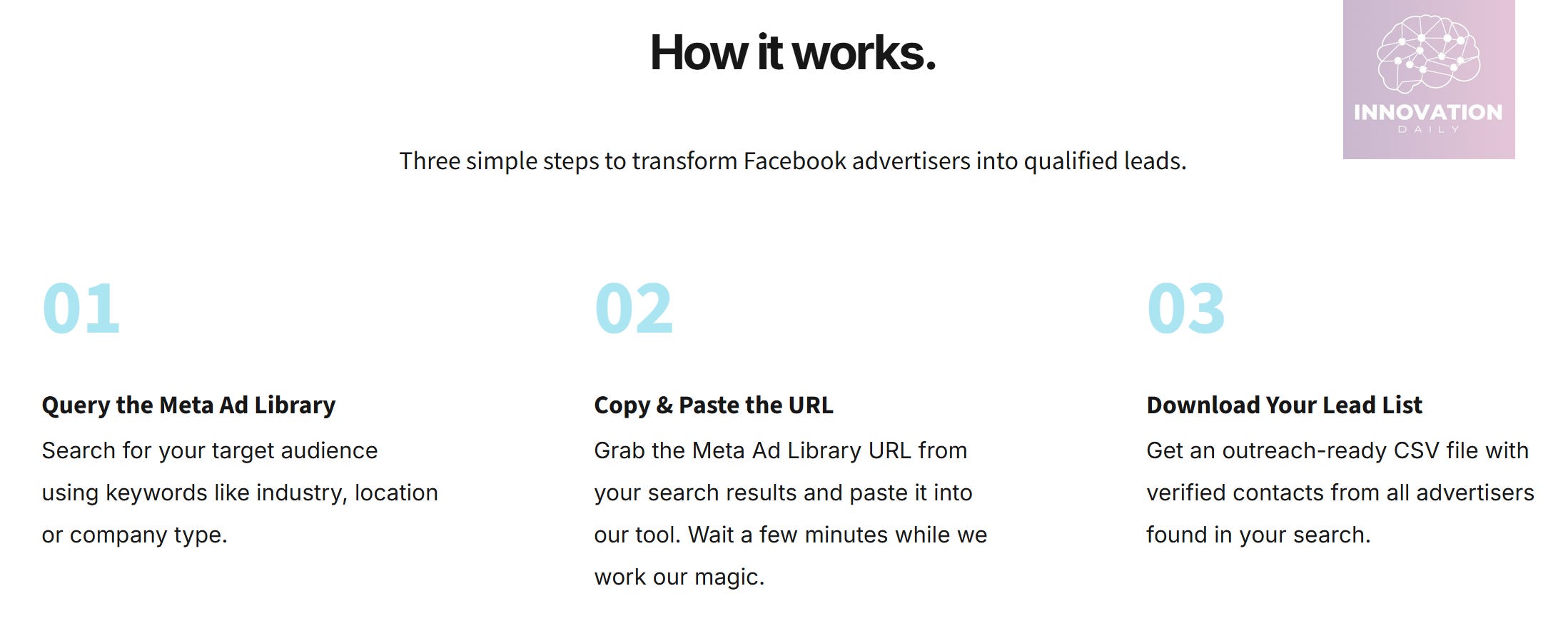
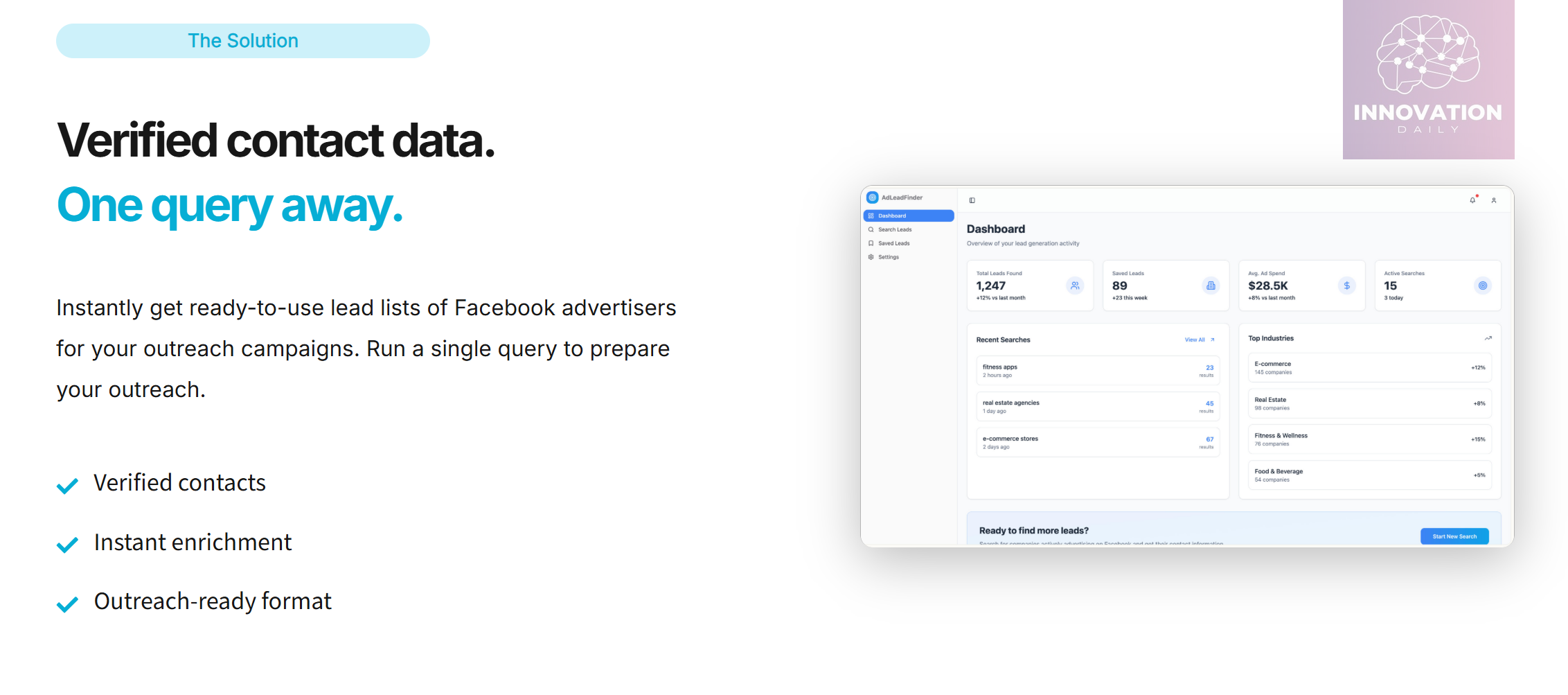
The charm is that ProspectEcho extracts not just company names and websites — it also discovers and enriches contact details, so you know exactly whom to email or call next.
Future versions will likely automate outreach too. Imagine an AI engine that analyzes what a company does, what ads it’s running, matches them with your services, and then drafts emails automatically. But this isn’t live yet — the platform launched only a week ago, spotted on Product Hunt.
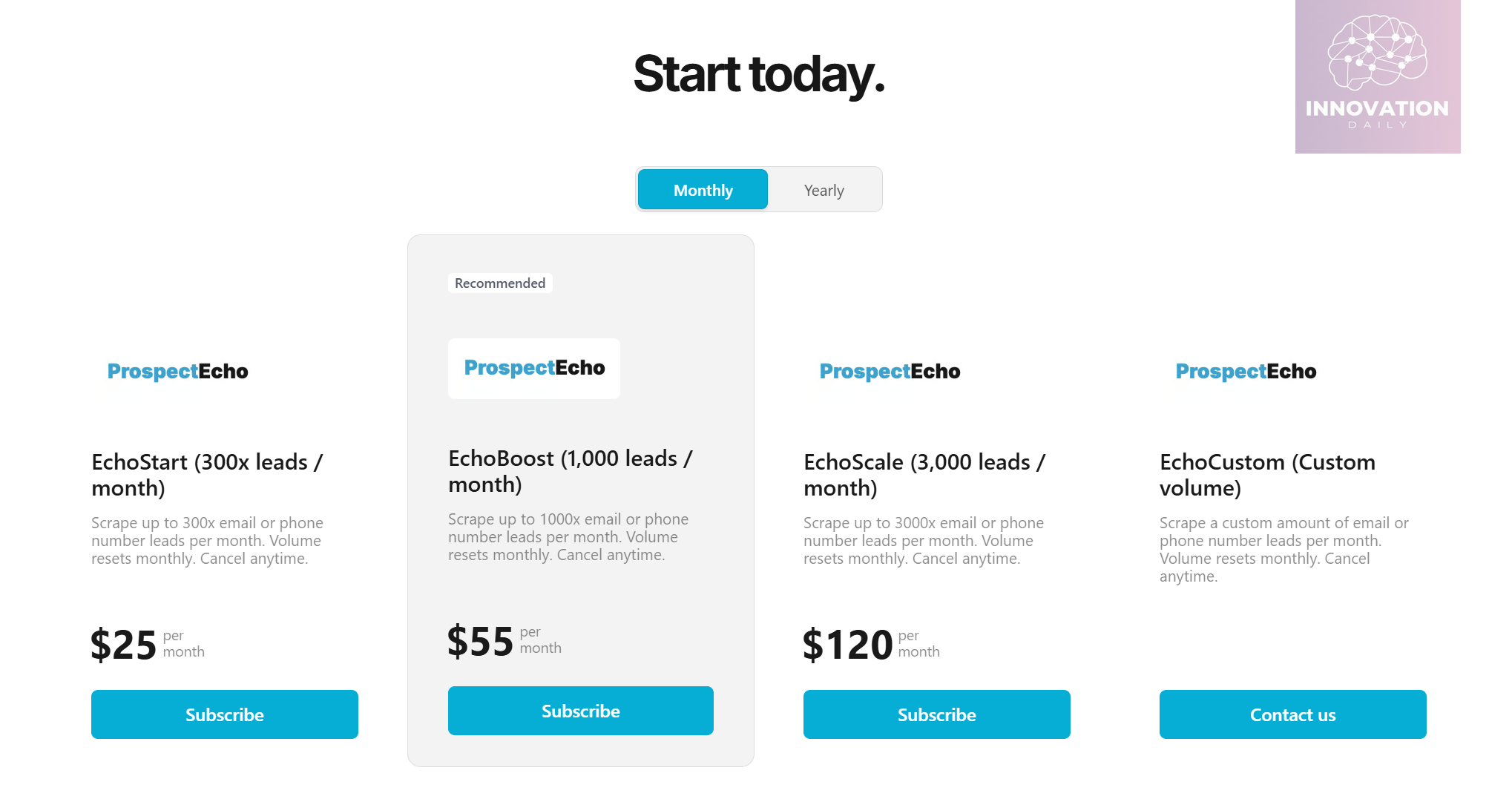
Pricing for the current version starts at $25–$120 per month, giving you 300 to 3,000 leads monthly.
What’s the Gist?
The insight behind the platform came from the founder’s own pain: he was spending around 10 hours a week manually searching through the Facebook Ad Library and digging up contacts. After building ProspectEcho for himself, the process shrank to two minutes a week — a dramatic productivity jump.
It’s a perfect example of a classic startup rule: build something that solves your own problem. The issue is that many people misinterpret it — trying to invent something complicated instead of creating the simplest useful solution right in front of them.
We all run into tasks that are tedious, time-consuming, or expensive. But instead of seeing them as opportunities, we treat them as annoyances. The ProspectEcho story flips that mindset: if something is a bottleneck for you, it’s very likely a bottleneck for dozens of others.
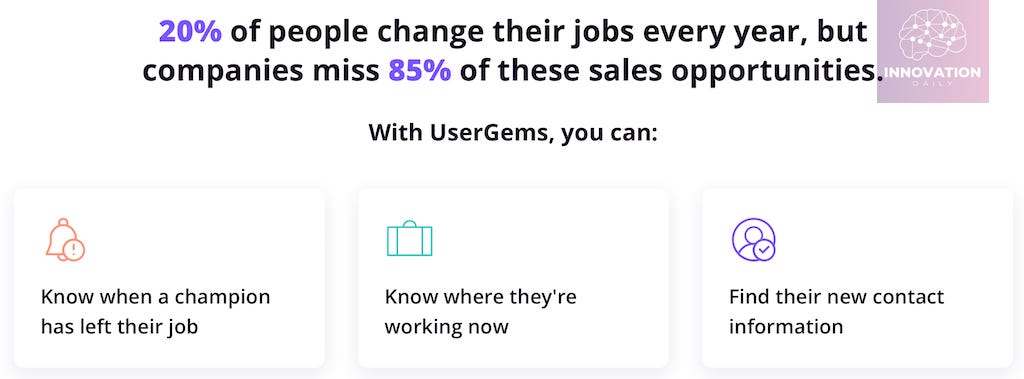
And simple ideas shouldn’t be underestimated. Even straightforward tools can evolve into sophisticated platforms. A good example is UserGems, which I wrote about back in 2021. The startup began with two extremely simple insights about tracking prospects — and still raised $20M early on:
It tracked employees who switched companies, enabling sales teams to reconnect with previous buyers at their new job. Since 20% of employees change roles each year, every transition became a sales opportunity.
It monitored newly appointed executives at target companies. These leaders typically spend 70% of their budget in the first 100 days — creating a perfect window to pitch new tools.

Today, UserGems is a full-scale intelligence platform with many more signals — and they haven’t raised additional funding, which likely means the product simply makes money.
ProspectEcho fits the same pattern: start with something simple but valuable, then let it grow.
Key Takeaways
The main lesson: don’t overlook your own problems. Each one is a potential product that could save you time, reduce effort, or improve performance — and if it’s useful to you, it’ll almost certainly be useful to someone else.
Simple ideas are powerful. According to Gall’s Law, every complex, effective system evolves from a simple, working one. Your job is to build that first simple, working version — and let it expand naturally.
So what tasks slow you down in your startup or company? What could you automate? How could that become a standalone product? And who else shares the same bottlenecks?
Why make things complicated when you can start with something simple?
Another interesting trend is that service teams in the industry are also moving in the same direction. Companies like Infiniti Growth increasingly rely on data-driven workflows and simple automation to reduce manual effort and focus on strategic work. It’s a reminder that efficiency doesn’t always come from complex solutions — sometimes it starts with small, well-designed tools that remove friction and free up time for real thinking.
Company Info
ProspectEcho
Website: prospectecho.com