

The Hidden Cost of Swipe-Based Dating
Today's featured startup is fixing it by turning matchmaking into an AI-driven interview process

Project Overview
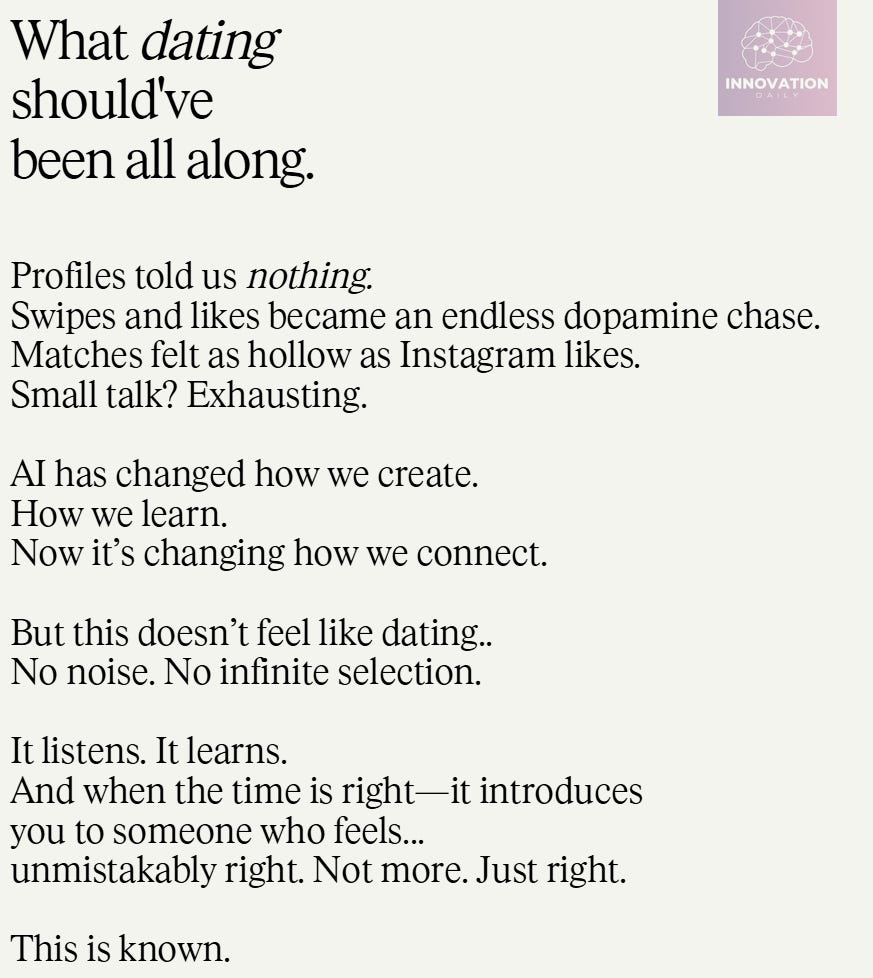
Known positions itself as a dating app built the way dating should have worked from the very beginning.
The core idea is simple: profiles don’t really tell us anything meaningful about people. Swiping left or right based on a few photos and short bios is about as informative as liking posts on Instagram — mostly noise.
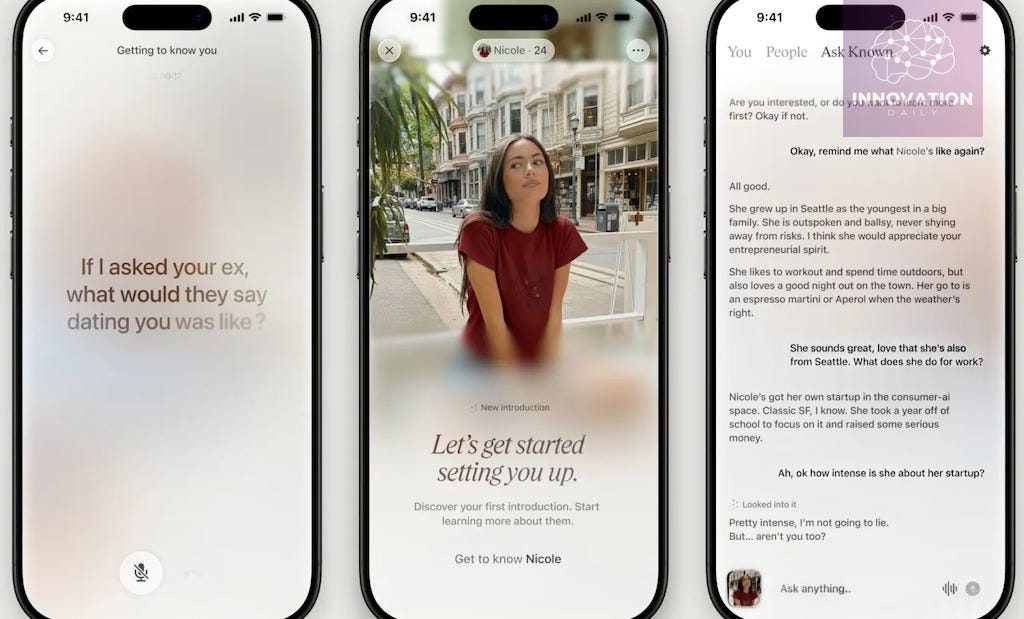
What can change the situation is AI that helps people meet those they’re genuinely likely to connect with.
That’s why Known is built around an AI interviewer. Before anything else happens, every new user must first have a conversation with the AI so it can understand who they really are. To do this, the AI asks unexpected, sometimes uncomfortable questions — for example: “If I asked your ex what it was like to date you, what would they say?”
Surprisingly, people are more than willing to open up in this format.
The average conversation with the AI now lasts 26 minutes, and some users spend up to 90 minutes talking about themselves.
Only after the AI has built a deep understanding of a person does it start showing their profile to others — who have gone through the same process. Matching happens not through profiles, but through what the AI has learned in these conversations.
When viewing a suggested match, users can ask the AI questions via voice or chat to learn more: who this person is, what they do, what their personality is like, and why they were recommended. In the ideal case, a user can say “I want to meet” or “I don’t” already knowing enough to avoid awkward first-date small talk.
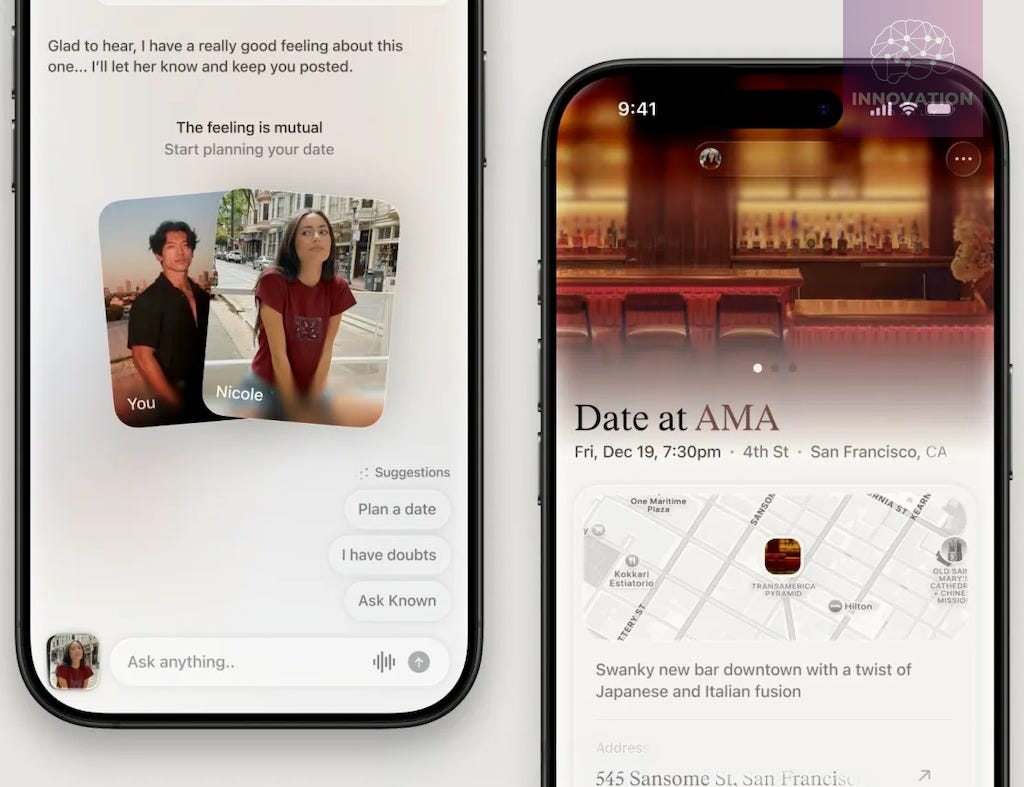
As a result, mutual interest occurs in 80% of introductions — far higher than in traditional swipe-based dating apps. This strongly suggests that matching based on AI-led conversations is significantly more effective.
If both users say “I want to meet,” the AI immediately suggests the best time and place for a date — based on schedules, locations, and inferred preferences.
The app also creates a sense of urgency. Users have 24 hours to respond to a suggested match and another 24 hours to schedule a date if interest is mutual. Miss the window — and that person disappears from the feed forever.
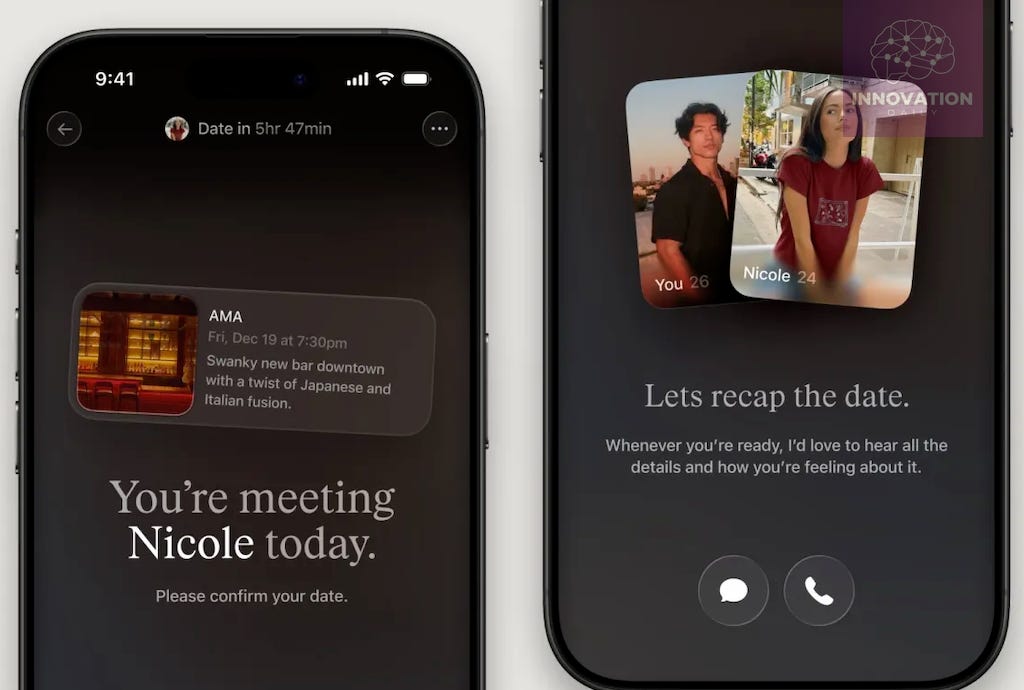
After the scheduled date, the AI checks in with both participants to confirm whether the meeting happened and to collect feedback. These insights are used to continuously improve matching — both globally and on a per-user basis.
Known is currently running in pilot mode in San Francisco and experimenting with monetization. According to some reports, the app charges $30 per scheduled date from each participant, which looks quite promising for the startup.
Despite its early stage, Known raised $9.7 million in funding last month.
What’s the Gist?
Going on dates based solely on profiles is like hiring people based only on résumés. Most of us already know how inefficient both approaches are.
Trying to “pre-filter” people through text chats doesn’t help much either — answers tend to be generic, shallow, or carefully curated. People only really open up in conversation, and meaningful conversations require skill to conduct.
It’s even better when those conversations are led by a neutral third party — someone the person doesn’t feel pressured or judged by. That’s why matchmaking has historically involved matchmakers, and hiring has relied on recruiters.
Today, that third party can be AI — capable of listening, asking the right questions, and drawing conclusions. This is why AI interviewers are now emerging across dating, recruiting (including non-romantic connections), and many other domains.
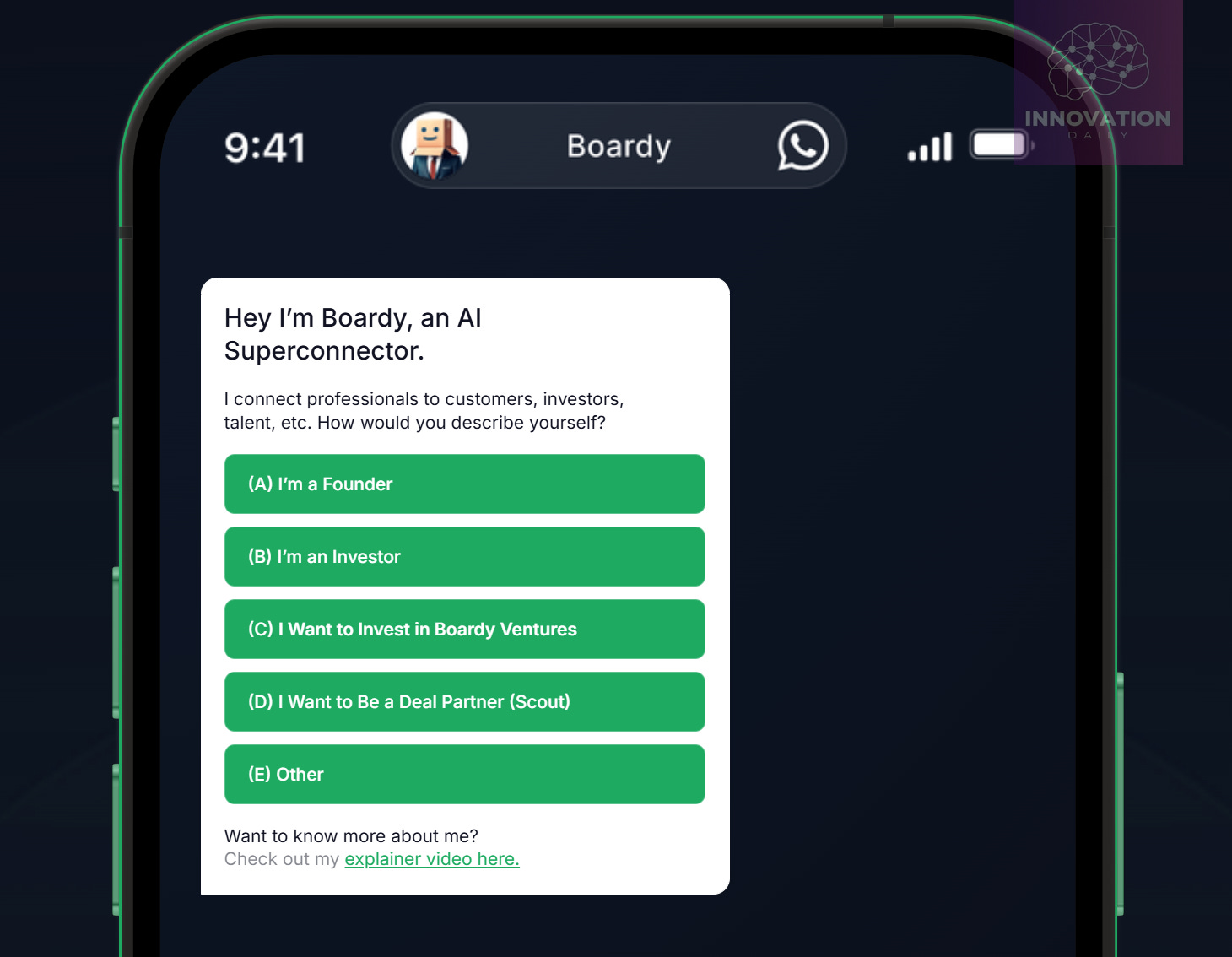
For example, Boardy raised $11 million for a professional networking app for founders, entrepreneurs, and investors. It works almost identically to Known: an AI conducts voice interviews, learns about participants, and only then introduces them — again, only when interest is mutual.
A similar approach is gaining traction in recruiting. Some platforms use two AI interviewers — one for candidates and one for employers. This model is used by Jack & Jill (raised $20M in its first round this October), Laborup (raised $5.8M in August), and Mercor, which has raised $483.6M, including $350M this August at a $10B valuation.
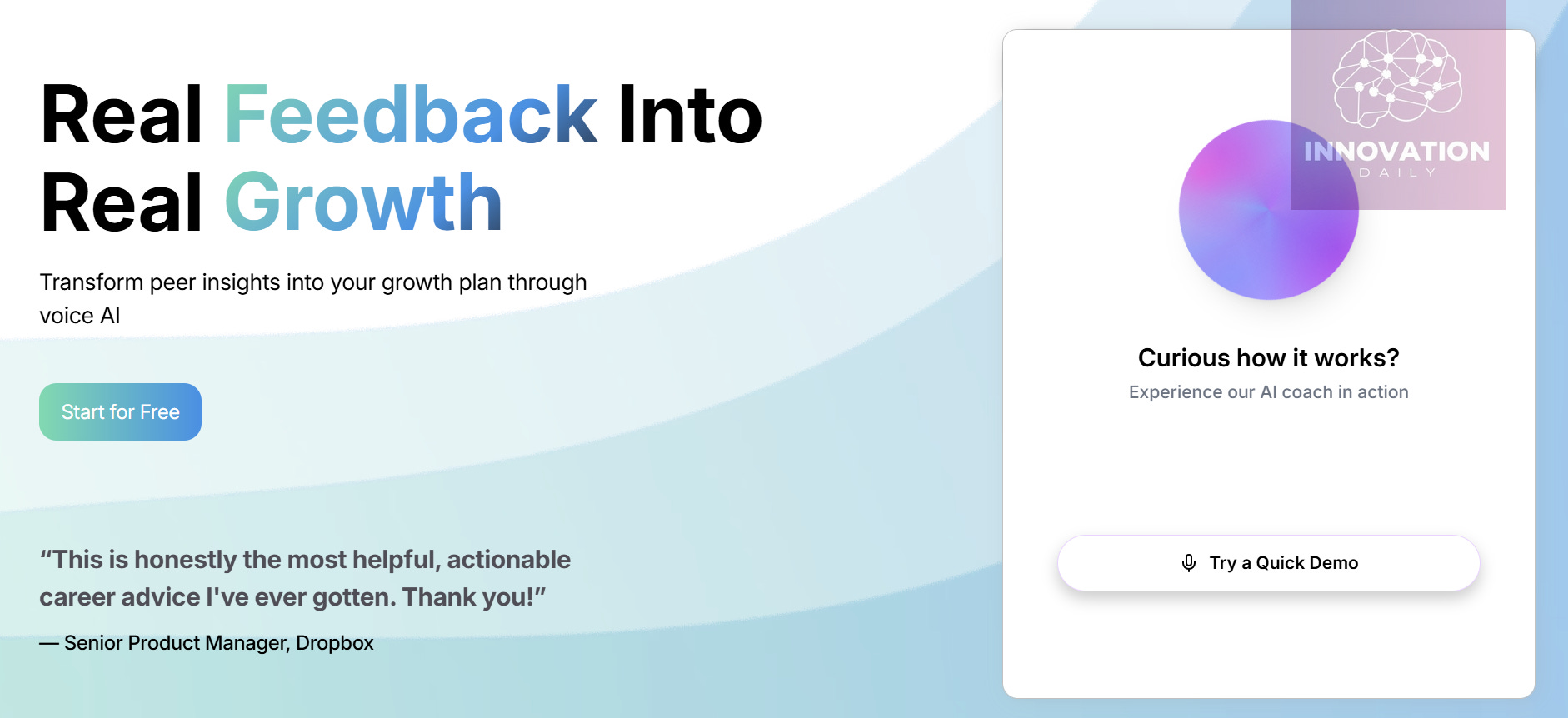
In October, Your360.ai launched a feedback platform for employees built on the same principle. The AI interviews colleagues, summarizes anonymous feedback for the employee, and then proposes a personalized development plan.
There are also platforms focused on user research. Outset (raised $30M recently) and Perspective (raised $4M earlier this year) conduct structured AI-led conversations with users to gather deep product feedback.
Key Takeaways
What unites all these startups isn’t just a voice interface. It’s the role AI plays as an interviewer — skillfully leading people into honest, reflective conversations to uncover what lies beneath the surface… and then using that insight for their benefit.
In technical terms, these conversations extract far richer data — including nuances people may not consciously recognize or know how to articulate. This enables much more accurate matching: between people, candidates and jobs, users and products, or buyers and sellers — anywhere traditional filters and parameters fall short.
This framing significantly broadens the opportunity space. It includes even platforms without voice interfaces, as long as they solve the same problem of fuzzy matching.

One example is Roster, a platform for finding designers, video editors, and other creatives who work in a similar style to yours. Users upload samples of th
eir work, and searches are based not only on skills, but on aesthetic similarity.
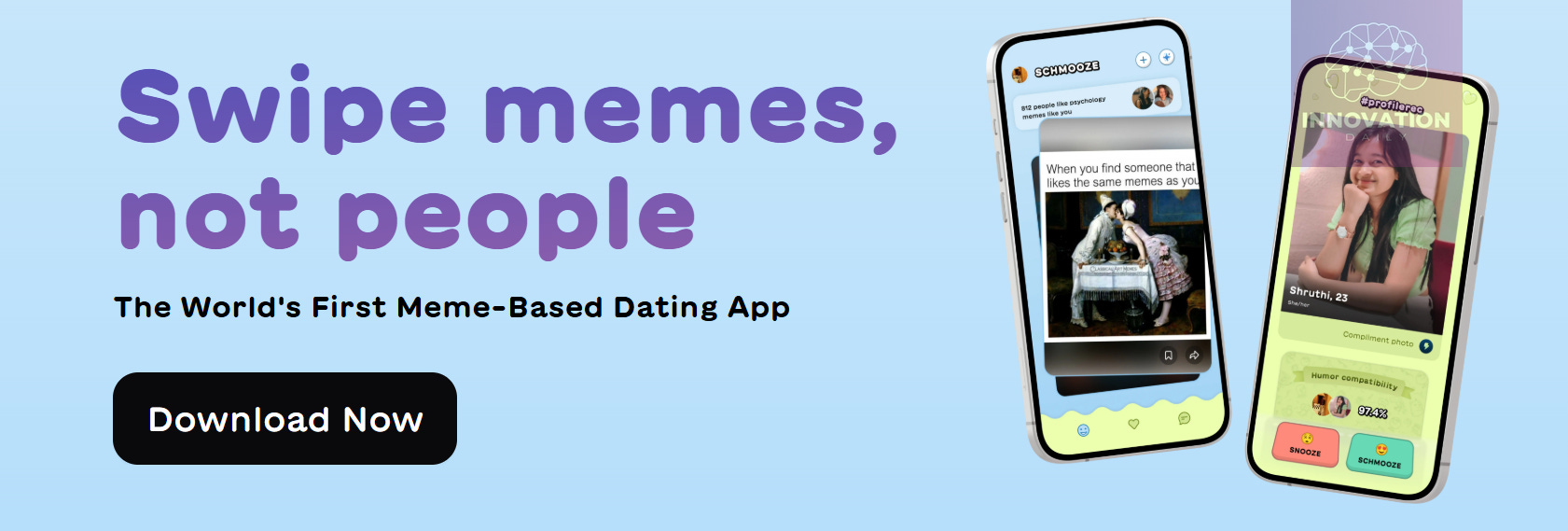
Since today’s story started with dating, it’s also worth mentioning Schmooze, which raised $7.5M by matching people based on the memes they like.
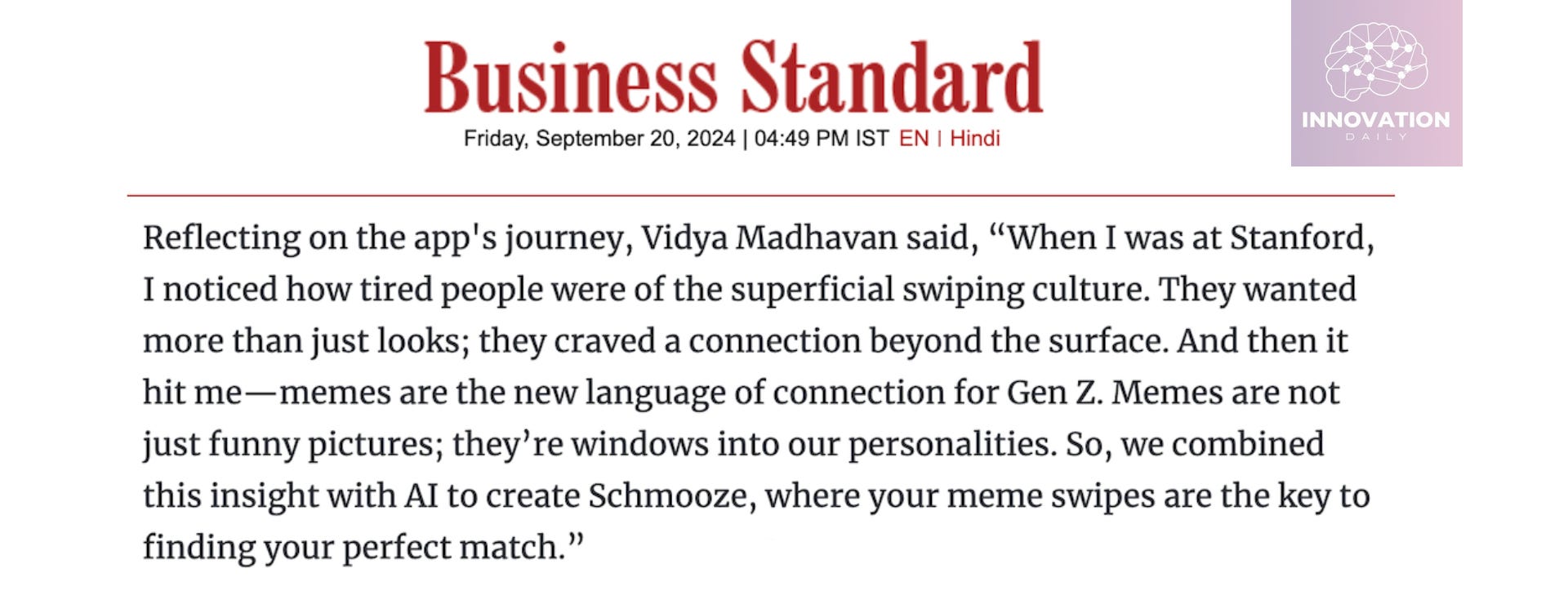
According to Schmooze’s founder, for Gen Z memes are a language — a window into the inner self. And the AI doesn’t just match people who like the same meme. It analyzes entire meme preference patterns to infer personality traits and suggest compatible matches — even if their favorite memes differ.
The broader direction is clear: AI-powered platforms for fuzzy matching, built on deep, multidimensional data collection and intelligent comparison.
The number of possible implementations and use cases is enormous — and they all feel new, because they rely on entirely new AI-driven methods of understanding people.
So the real question is:
in which domain — and how — could your own version of this platform work?
Company Info
Known
Website: knowndating.com
Latest Round: $9.7M 13.11.2025
Total Funding: $9.7M across 1 round