

The Missing Middle in Home Design
Today's featured startup is building an AI-native way to design custom homes faster, cheaper, and without turning into an operational nightmare

Project Overview
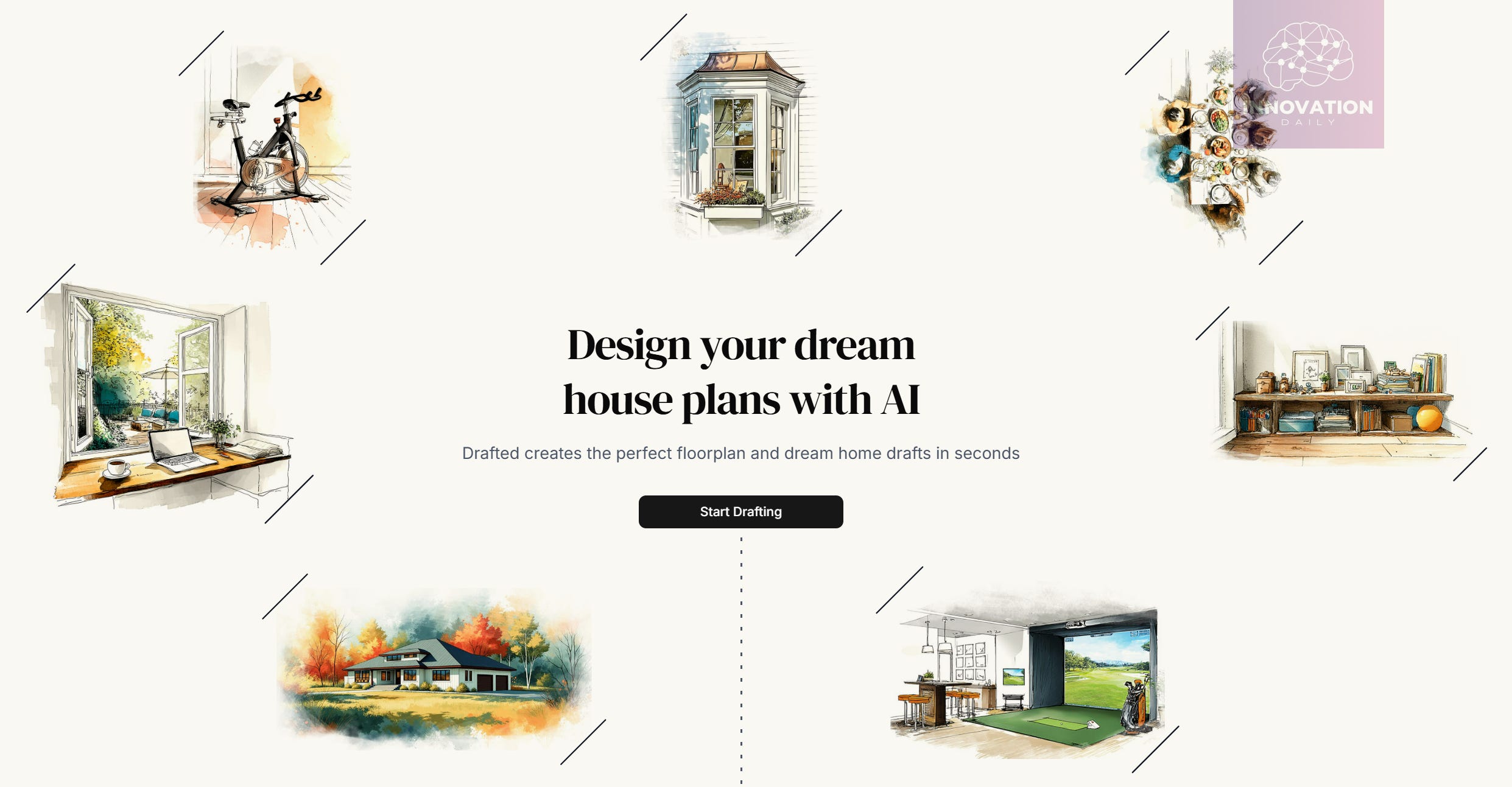
Drafted is an AI-powered platform that lets anyone design their future home — from a rough idea to a construction-ready project.
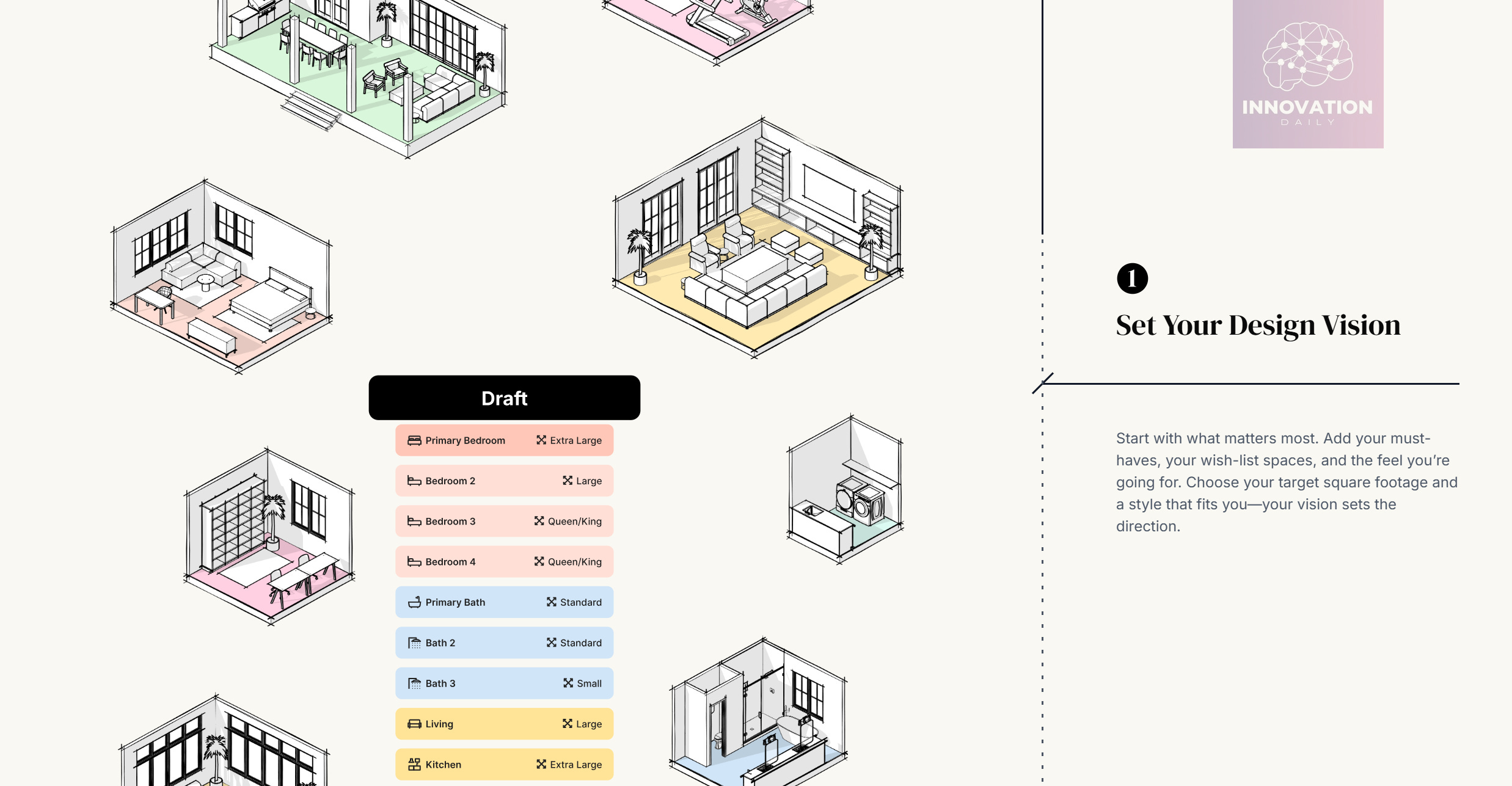
The process starts with a simple conceptual step. Users choose key rooms from the platform’s catalog, selecting their function, size, and style. That’s enough to define the initial vision.
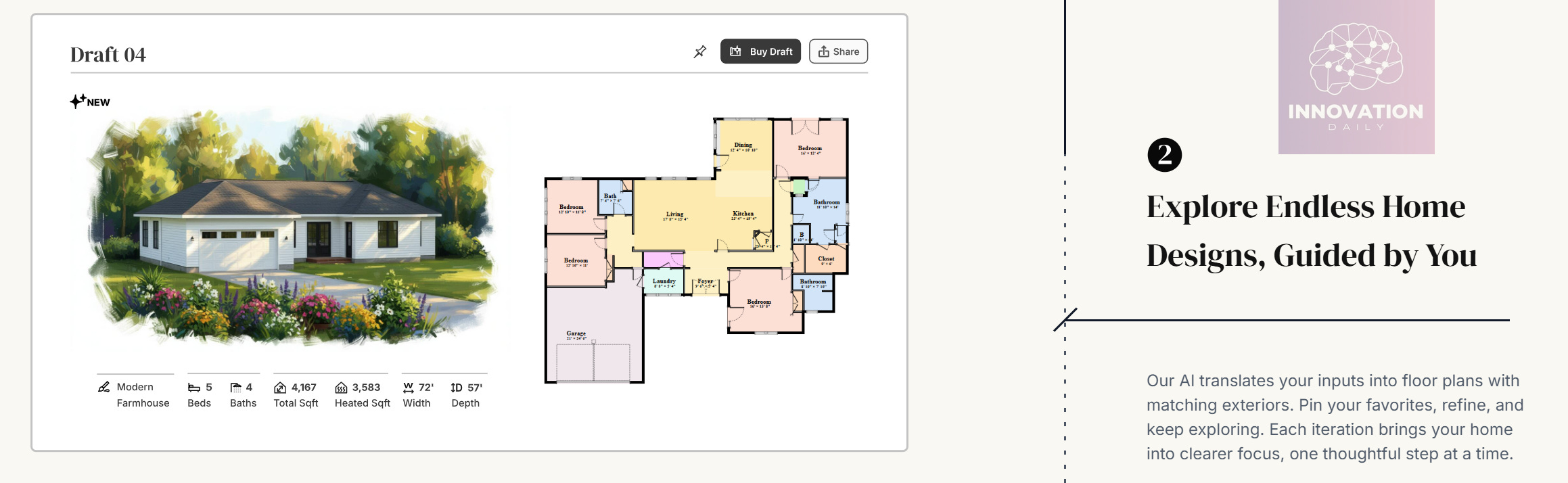
From there, Drafted’s AI generates five complete house design concepts. The user picks the most appealing option, adds feedback and preferences, and the AI produces five new iterations. By repeating this loop, users gradually refine the design until it fully matches their expectations.
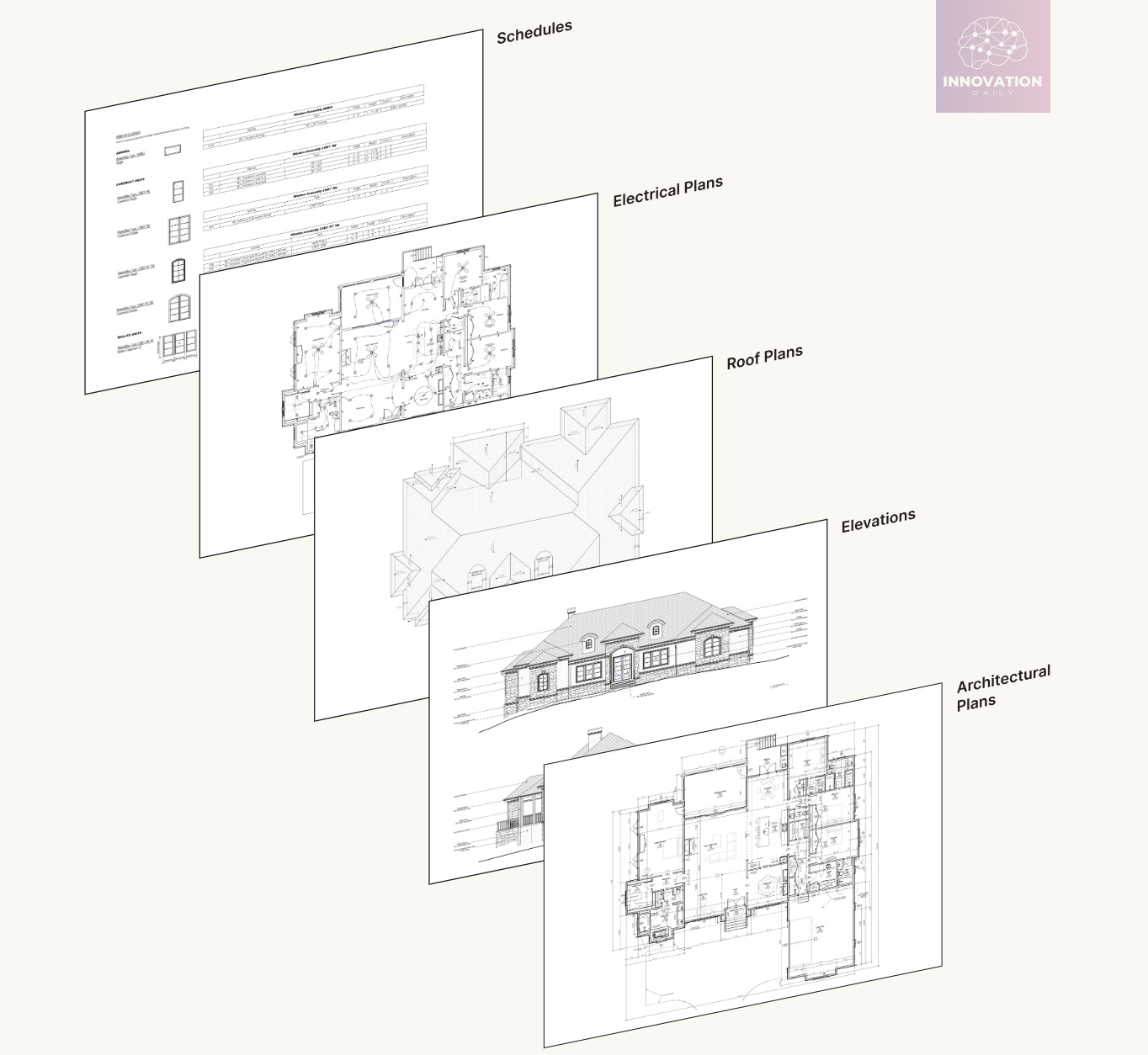
At the final stage, the user pays for a full architectural package — delivered as a PDF or AutoCAD files. The output includes facade plans, floor layouts, roof plans, electrical wiring diagrams, and even a construction and materials delivery schedule. Pricing depends on complexity, typically ranging from $1,000 to $2,000.
This project can be handed directly to a construction company for cost estimation and execution. From there, users can either refine the design with a chosen contractor or move straight into building.
Drafted was founded this year and has already raised its first round: $1.65 million at a $35 million valuation.
What’s the Gist?
What makes Drafted especially interesting is the founder’s background. Back in 2020, he launched Atmos — an online company offering turnkey home design, aiming to be faster and cheaper than traditional architectural firms.
That same year, Atmos went through Y Combinator, successfully launched, raised $20 million in funding, and reached $7 million in annual revenue.
But as the founder later admitted, Atmos gradually turned into a fully operational business — essentially a traditional architecture firm with some tech layered on top. That wasn’t what he wanted. Nine months ago, he shut Atmos down entirely.

Drafted is his second attempt at the same problem — but with a fundamentally different approach. The startup has already been accepted into Y Combinator’s upcoming Spring batch. This time, the goal is not to run an operations-heavy business, but to build a purely technology-driven company by developing an in-house AI engine for home design.
With this approach, Drafted aims to sit between two extremes: slow, expensive architectural firms on one side, and cheap but rigid off-the-shelf house plans sold online on the other.
This journey reflects a broader and very familiar dilemma for tech founders entering traditional industries — not just architecture.
Sooner or later, they face a fork in the road.
One path is to keep building what is essentially a traditional business, supported by technology. That usually ends up as a classic operations-heavy company, with all its pros and cons.
The other path is radical simplification — resulting in a cheap but inflexible product. Such solutions appeal mainly to customers who are either satisfied with basic quality or simply can’t afford anything better.
For years, there’s been a wide gap between these two extremes. Many companies tried to bridge it from above or below: premium players introduced cheaper products, while budget providers tried to sell flexibility and quality as add-ons. Most of those attempts failed.
You can’t easily harness two different horses to the same cart. Expanding up or down tends to break internal processes, create conflicts, and eventually lead to chaos.
The only viable solution emerging today is AI-native products.
They offer far more flexibility while staying relatively affordable — landing right in the middle between the extremes.
The open question is whether this “middle ground” is wide enough to support a truly large business. After all, the classic way to make big money is still to sell either expensive products to a few customers, or cheap products to many.
Looking at the U.S. housing market, around 1.5 million homes are built each year — and only about 300,000 use custom designs.
One of Drafted’s investors believes this is a classic chicken-and-egg problem. Cheap custom designs don’t satisfy most buyers, while high-quality custom architecture is simply too expensive — or psychologically hard to justify — for the majority.
If decent-quality custom designs become affordable and fast, demand will emerge. As an analogy, he points to Uber: before its launch, far fewer people used taxis, and far less frequently.
Whether this logic holds true in home design remains to be seen. But the principle itself has worked before.
A familiar example is Shopify. Early on, its founder struggled to raise capital because investors believed the existing market of 40,000 online stores was too small for a venture-scale company.
The founder disagreed. He believed the number of online stores would explode if friction was removed — by simplifying and lowering the cost of building and managing them.
He was right. Today, over 1.5 million online stores run on Shopify.
Key Takeaways
Some of the most attractive opportunities for tech startups today lie in conservative, traditional service markets. These are exactly the spaces where technology can still unlock massive efficiency gains — and this trend is already producing a wave of new startups.
Sooner or later, founders in these markets will face the same dilemma: build a traditional business or retreat into the niche of cheap, simplified solutions. There’s nothing inherently wrong with running an operational business — but not every founder wants that kind of company.
That’s why AI-native products are such a promising direction. They may become the “golden middle” — combining acceptable cost, speed, and flexibility. This is precisely the path Drafted’s founder has chosen.
So here’s a question worth thinking about.
Which conservative service market do you find large and interesting enough? What kind of AI-native product could sit between expensive/slow and cheap/inflexible solutions there? What would it actually do?
Is there a chicken-and-egg problem on that market — where demand for “middle-ground” solutions is suppressed today? And could that demand grow significantly if quality, speed, and pricing finally align?
One thing is certain: this chicken-and-egg problem must exist. If it doesn’t, then the market is already fully served.
And if it does — there’s a real chance to build something big.
Company Info
Drafted
Website: drafted.ai
Total funding: $1.65M across 1 round
Last round: $1.65M 23.12.2025