

When Emotion Becomes a Platform
Today's featured startup is turning animal behavior into data — and building a scalable AI business around emotional insight

Project Overview
This is the first startup review of the new year, so it feels right to start with something slightly mind-bending.
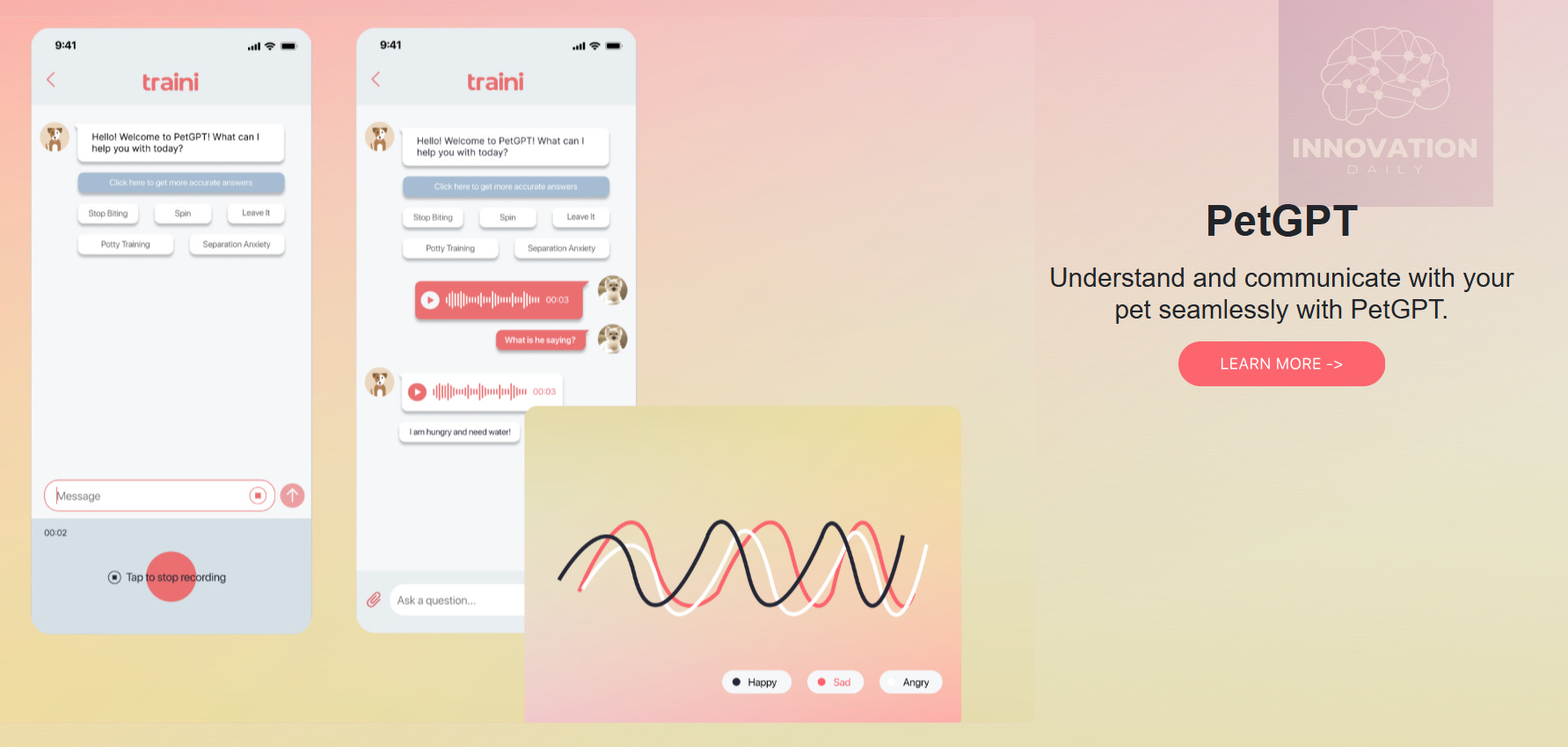
Traini has built PetGPT — an AI system designed to “understand” the language of pets.
At the moment, the product focuses exclusively on dogs. The setup includes a mobile app and a smart collar that connects to the app via Bluetooth.
The collar captures barking sounds, while the phone’s camera can be used to take photos or record videos of a dog’s behavior. The app’s AI then analyzes posture, facial expressions, and vocal patterns to interpret what the dog might be feeling or trying to communicate.
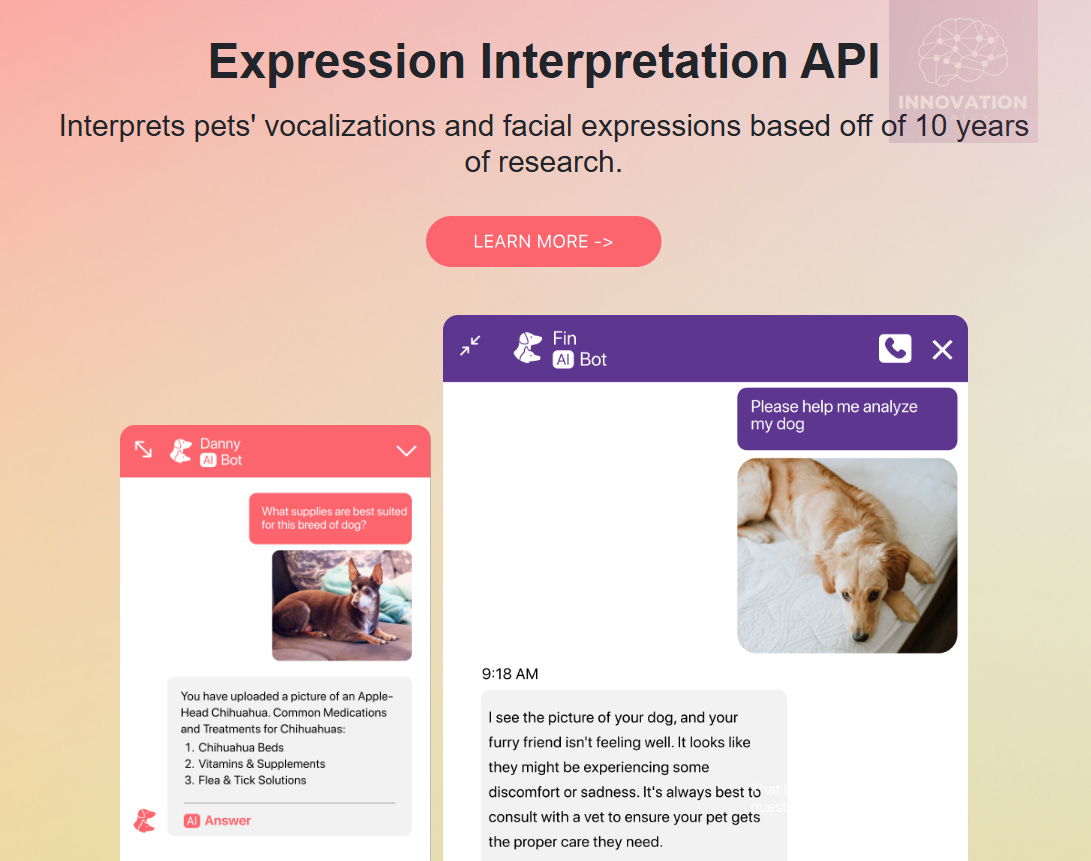
That said, some of the current interpretations look fairly basic — things like: “Your furry friend’s posture and facial expression suggest discomfort or sadness. You may want to consult a veterinarian to make sure everything is okay.”

Beyond these interpretations, the app also delivers additional content tailored to the dog’s breed and current condition: nearby veterinary clinics, suitable training programs, recommended products, and other relevant insights.
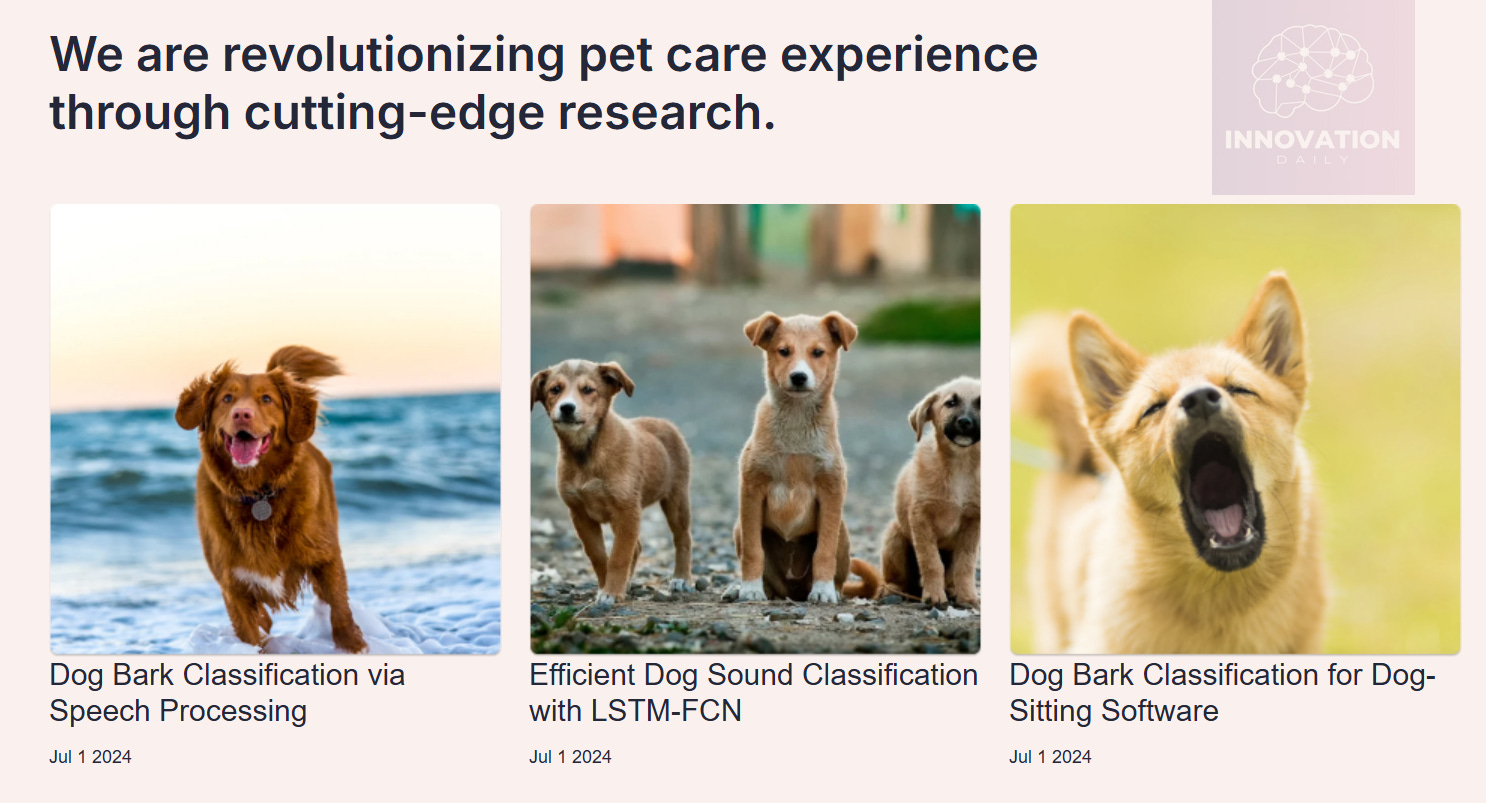
Traini claims its AI is built on years of research into digital analysis of dog barking and visual behavior. As a result, the startup says it can recognize emotions across 120 dog breeds with up to 94% accuracy.
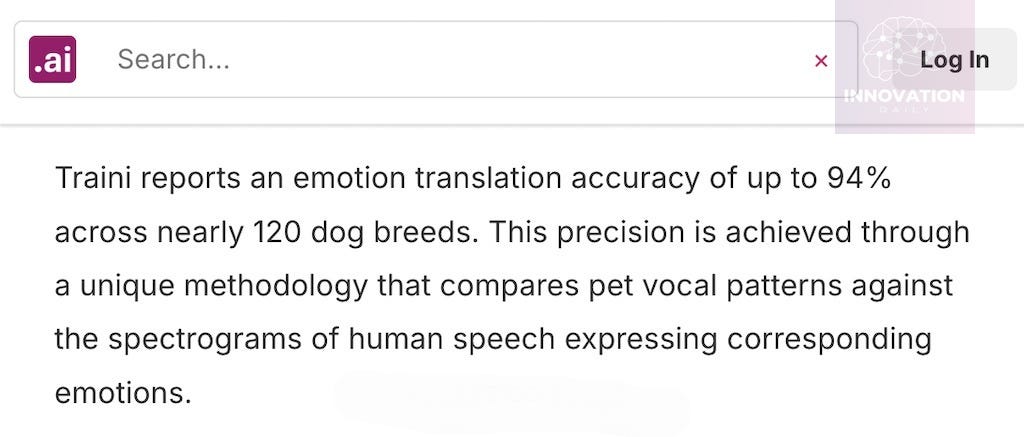
This accuracy, according to the team, comes from a proprietary methodology that matches dog bark spectrograms with human voices expressing similar emotions.
As Mayakovsky once wrote, “we are all a bit like horses.” In this case, it seems we’re all a bit like dogs — or maybe every dog is a little bit human.
The first version of the Traini app launched in November 2024. But the startup’s ambitions go beyond pet owners. Traini is already offering its API to veterinary clinics and hardware manufacturers, allowing them to embed these algorithms into their own platforms and devices — for example, a car audio system that adjusts music based on a dog’s mood inferred from its barking.
Traini is a US-based startup with Chinese roots. It raised its first $200,000 in 2022 while still in early development. In summer 2024, the company secured $3.2 million to support the app’s launch. Just days before the New Year, Traini raised another round — this time in yuan — equivalent to $7.1 million.
What’s the Gist?
Let’s be clear: there’s no magic or fraud behind Traini’s algorithms.
The system is trained on large datasets linking dog barks and body language to observed causes and outcomes — a fairly standard AI task when you strip away the hype.
In fact, a similar learning process happens in real life with parents of young children. Over time, they instinctively learn to tell whether a baby is crying from hunger, fatigue, or something else entirely.
By that logic, a comparable AI for interpreting babies’ emotions wouldn’t be far-fetched either.
Interestingly, Google has been exploring animal “speech” recognition as well. Last year, it began researching this area starting with dolphins — and published details not only in academic journals but also directly on DeepMind’s website.
One particularly important detail in Traini’s approach is its learning-in-use mechanism. The app continues to improve by collecting feedback from users who confirm whether the AI’s emotional interpretation was accurate.
This creates a powerful competitive moat. The more users contribute feedback, the better the model becomes. And as the model improves, the app becomes more valuable — a classic network effect.
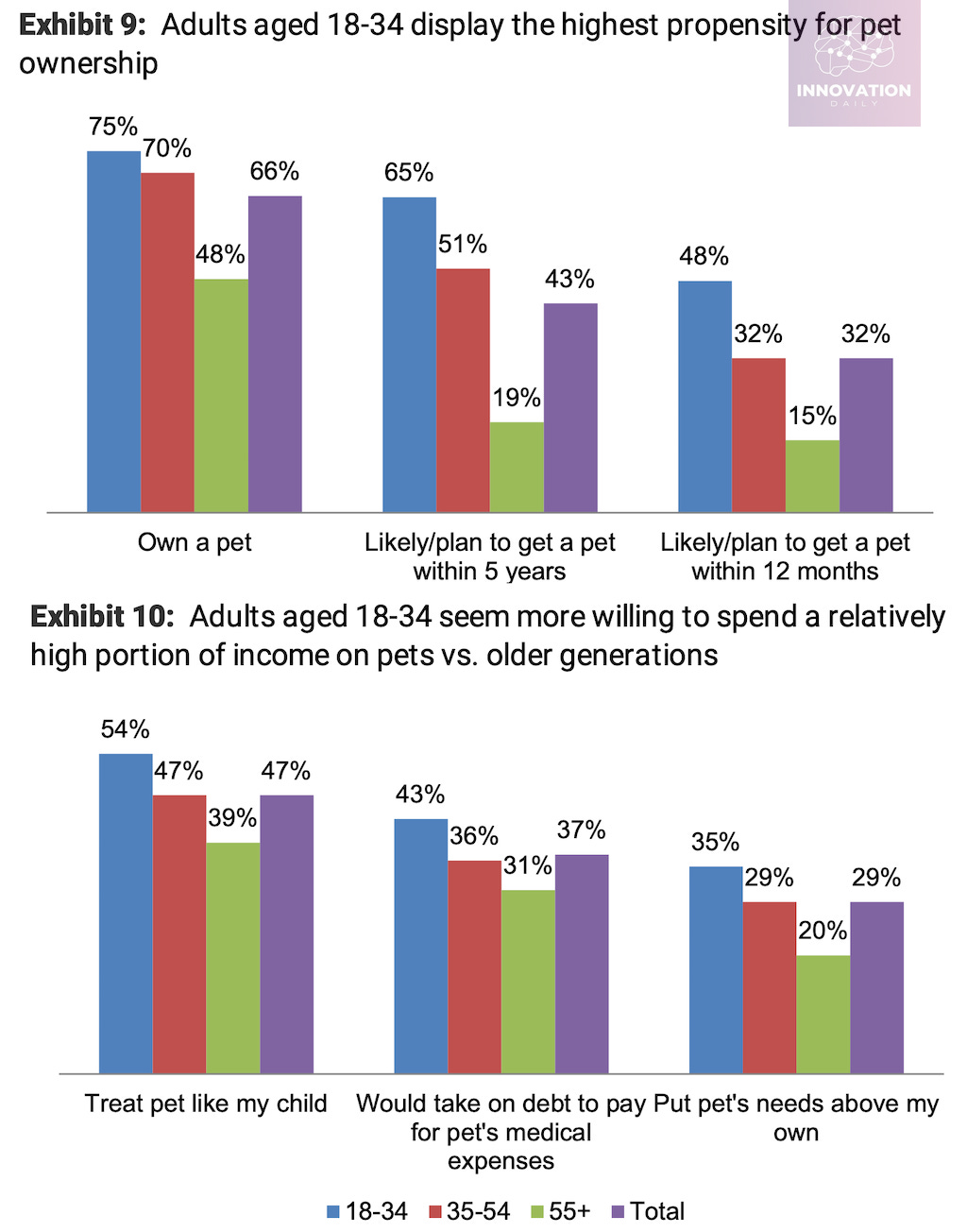
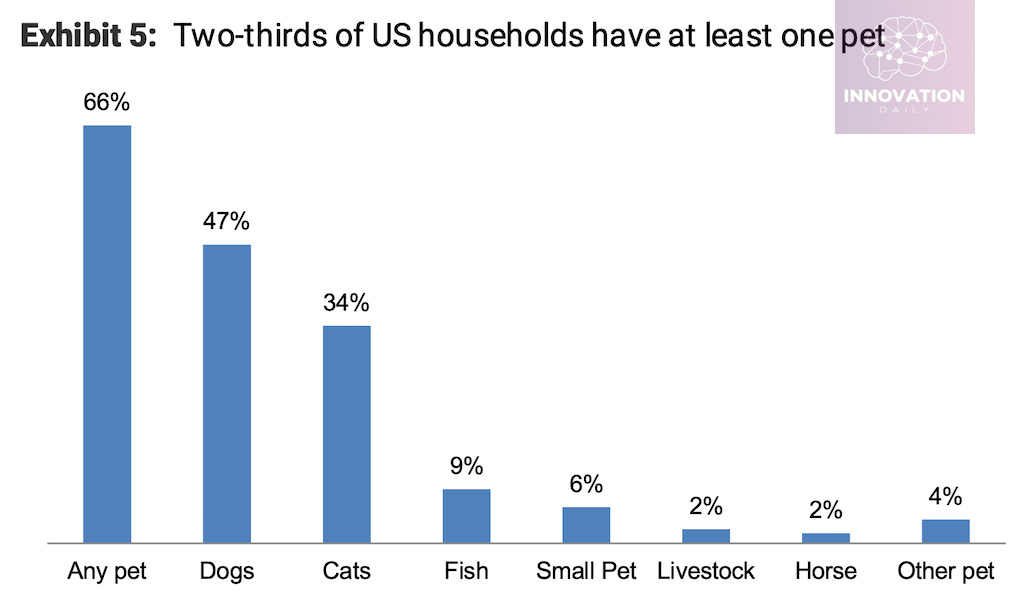
Traini is also targeting a massive market. In the US, 66% of households own at least one pet. Dogs are the most common, present in 47% of households, followed by cats at 37%. Aquarium fish come a distant third at just 9%.
You might assume that interest in pets skews toward older demographics — but reality shows the opposite. Americans aged 18–34 own the most pets and are also the most likely to adopt one in the coming year.
Even more telling:
54% of people aged 18–34 treat their pets with the same care and emotional attention as children
43% are willing to go into debt to pay for veterinary services
35% openly say they prioritize their pets’ needs above their own
Given that mindset, would these people hesitate to buy an app that helps them better understand their pet?
Key Takeaways
The most obvious direction inspired by today’s case is building AI applications and devices that recognize emotions in dogs and cats — the two most common household pets.
But the range of potential use cases is much broader. For example, imagine a smart speaker designed specifically for pets — something like Alexa for animals — that automatically plays or switches music based on their mood, helping them feel calmer when their owners are away.
There’s also a broader lesson here for anyone building AI platforms in any industry.
Many teams aim to create a “perfect” AI system that works flawlessly from day one. But if that’s actually possible, it often eliminates long-term competitive advantage — because competitors can replicate the same ideal algorithm.
The real opportunity lies in choosing a domain where a perfect algorithm is impossible, but continuous improvement is endless.
In that case, the platform’s value grows through ongoing user feedback and incremental learning — generating a network effect where more users directly increase product quality. Over time, startups that launch earlier or scale faster become increasingly difficult to catch up with.
So here’s the real question:
How could your AI platform be designed to generate a similar network effect?
Or put differently — in which domain could you build an AI platform where value compounds naturally as more users participate in training it?
Company Info
PetGPT
Website: traini.app
Last round: $7.1M 29.12.2025
Total funding: $10.6M across 3 rounds