

Why Corporate AI Keeps Failing
Today's featured startup is tackling one of the biggest blind spots in enterprise AI: the lack of shared memory that lets teams learn and improve together

Project Overview
Let me start with a warning: today’s startup built a tool for developers.
But don’t close this article just yet — even if you’re far from programming. The underlying idea applies to any corporate AI system, and that’s where things get interesting.
The core promise behind Grov is simple: your AI should remember what it has already learned.
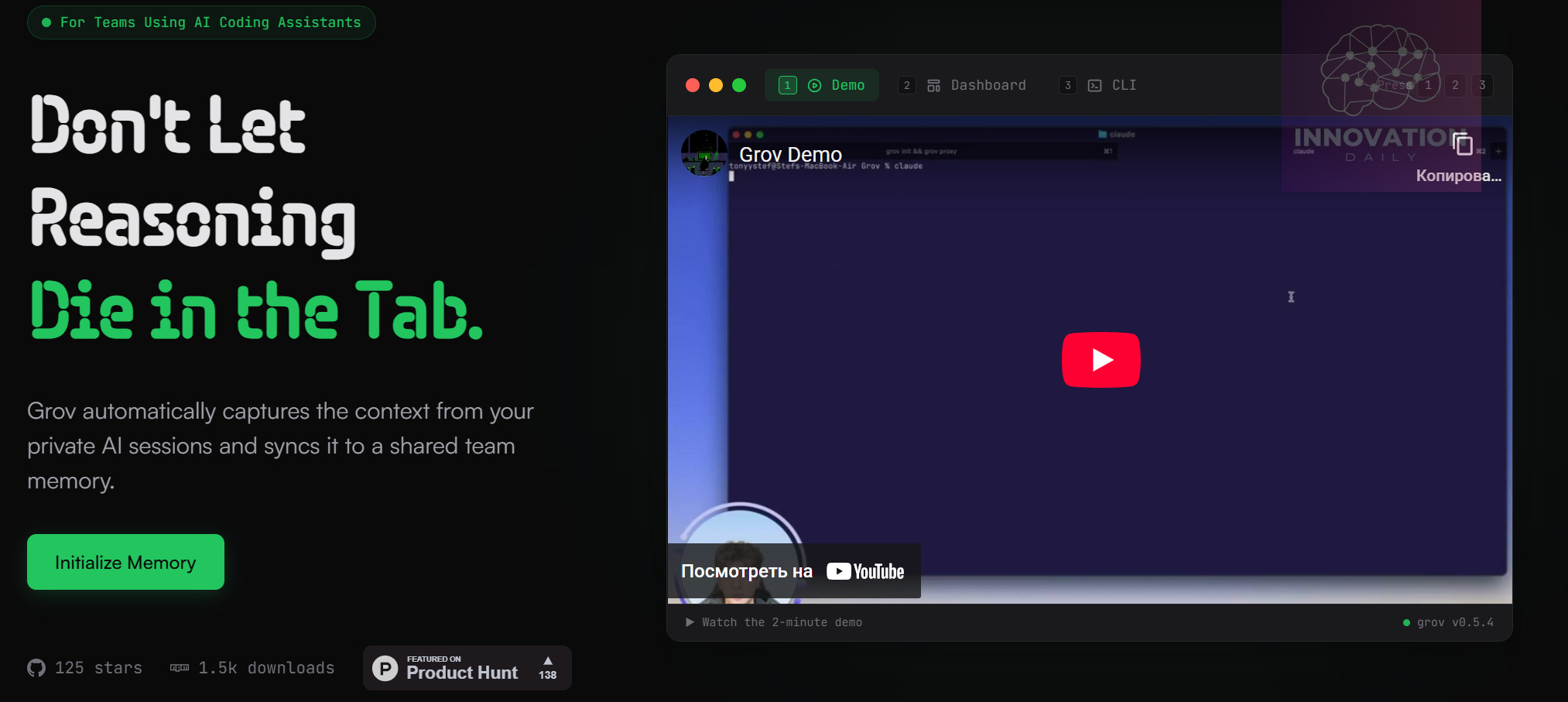
In practice, Grov is designed for development teams that use AI coding tools like Claude Code. Its approach is straightforward but powerful: Grov captures useful insights from every AI session run by every developer and stores them in a shared team memory. That memory is then reused across future AI sessions — regardless of who on the team is prompting the AI.
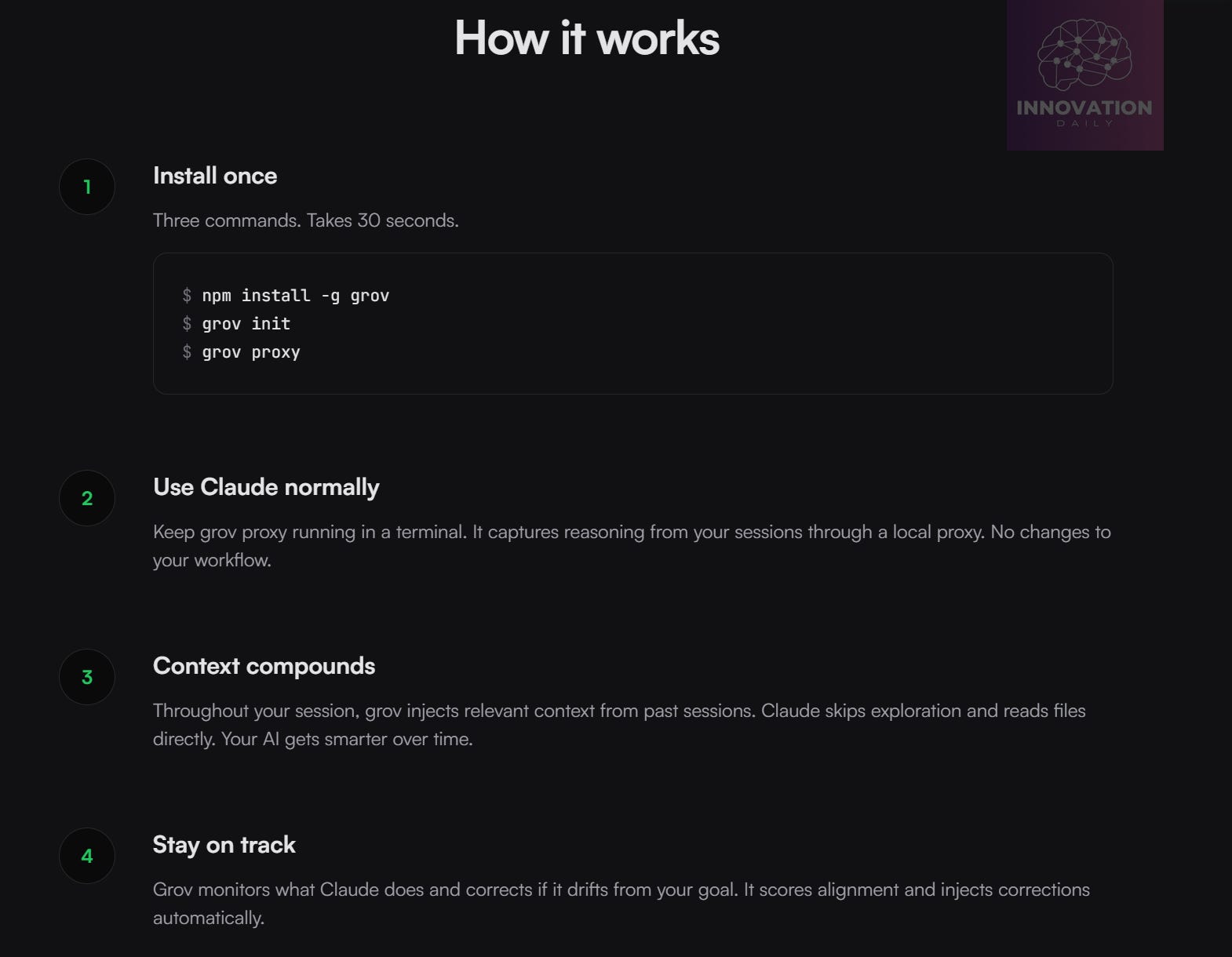
Once Grov is installed, developers don’t need to change their workflow. All AI requests are routed through Grov automatically. Along the way, it decides what’s worth remembering and subtly adjusts prompts or responses based on past experience.
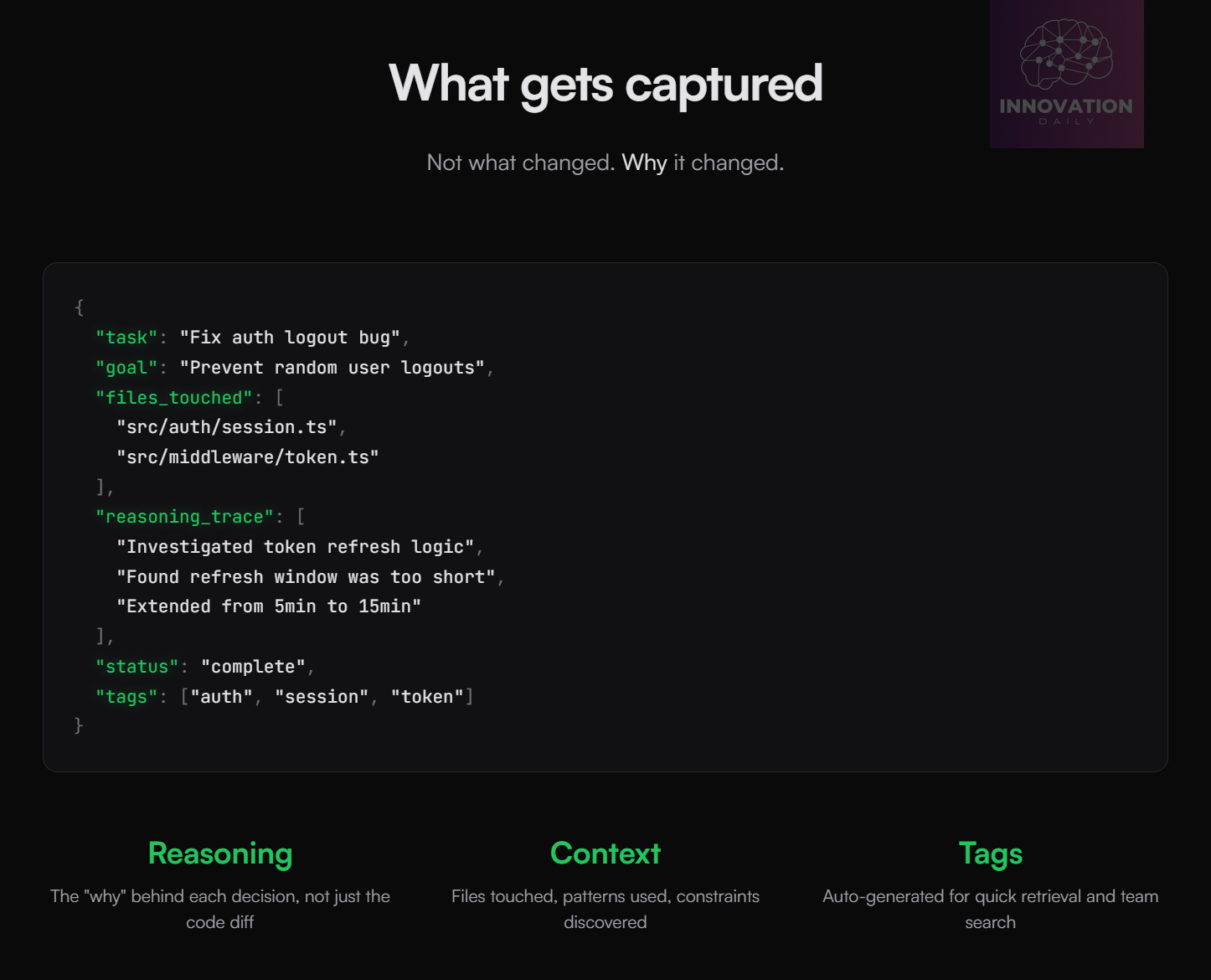
The key differentiator is what Grov remembers. It doesn’t just log what was changed — it captures why it was changed.
For example: a certain code modification was made to increase in-memory data retention because otherwise the system kept hitting remote storage too often, degrading performance. That reasoning matters. It’s the kind of constraint another developer could unknowingly violate in a different context. Grov stores these insights so the team doesn’t repeat the same mistakes.
All of this accumulated reasoning is available in a human-readable “Memory” section. More importantly, Grov automatically applies this shared memory when processing AI requests from other developers — so the AI adapts based on collective team knowledge.
The same mechanism is used for code analysis. Normally, AI tools reanalyze the same code across multiple sessions, wasting time and tokens. Grov can reuse prior analysis results — even if they were generated by a different developer — as long as the code and dependencies haven’t changed.
The result:
code analysis time drops by nearly 10×,
token usage decreases by 3–4×.
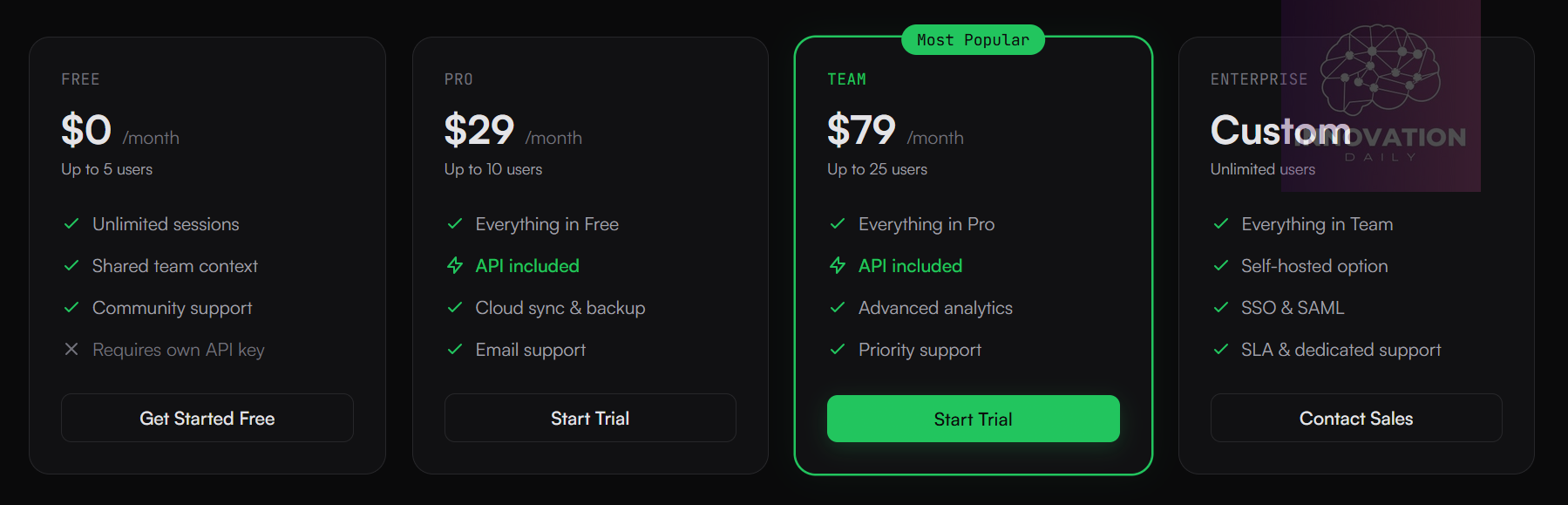
Small teams of up to five developers can use Grov for free (without API access). Paid plans cost $29/month for teams up to 10 developers, or $79/month for teams up to 25. Grov launched on Product Hunt last week.
What’s the Gist?
The real problem Grov addresses isn’t tooling — it’s how teams actually use AI.
Even when an entire team relies on the same AI assistant, there’s no real “team usage.” Everyone interacts with the AI individually. As a result, one person can solve a problem that another teammate unknowingly runs into again later.
To step away from code, imagine a simpler scenario.
One employee asks ChatGPT to draft a contract. The draft looks fine, but it misses a company-specific clause. The employee notices the issue, explains it to ChatGPT, and gets a corrected version.
Later, another employee asks their ChatGPT to draft a similar contract. Unsurprisingly, the same company-specific mistake appears again. Best case, the second employee catches it and fixes it — wasting time. Worst case, they don’t.
In an ideal world, ChatGPT would remember the correction and apply it automatically the next time. The second employee would get a better draft right away — and might even spot a new issue, making the next version even stronger.
But expecting this from a universal AI model makes no sense. It’s designed to be generic.
That’s why team-based AI needs an additional layer: shared organizational memory. A place where domain-specific experience accumulates and is reused.
Once you add this layer, teams stop using “their own” AI tools. Instead, they all work with one shared AI system, enriched by collective experience. That’s exactly the architecture Grov applies to development teams.
Interestingly, a similar idea appeared in a completely different domain. The startup DocketAI initially helped sales teams answer technical customer questions accurately, without constantly looping in engineers.

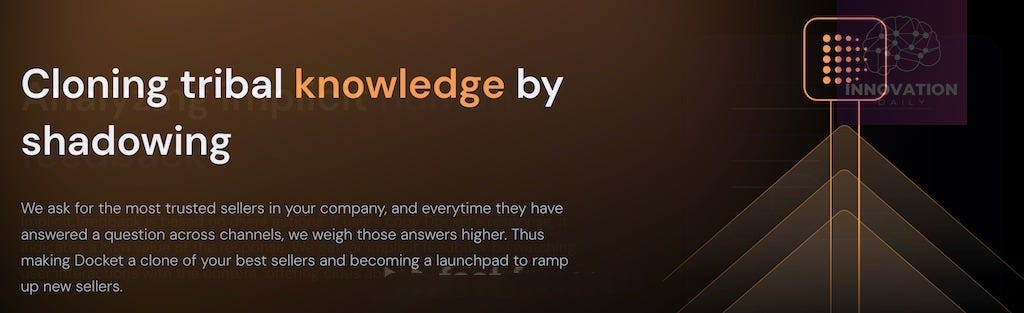
Most such platforms rely on static knowledge bases built from documentation. DocketAI added an extra layer: shared team feedback. Sales reps could like AI answers, while engineers could confirm or correct them. Verified answers gained priority, ensuring the AI reused proven responses instead of default ones.
DocketAI has since pivoted into a platform for running sales meetings directly on company websites, but the underlying architecture remains the same.
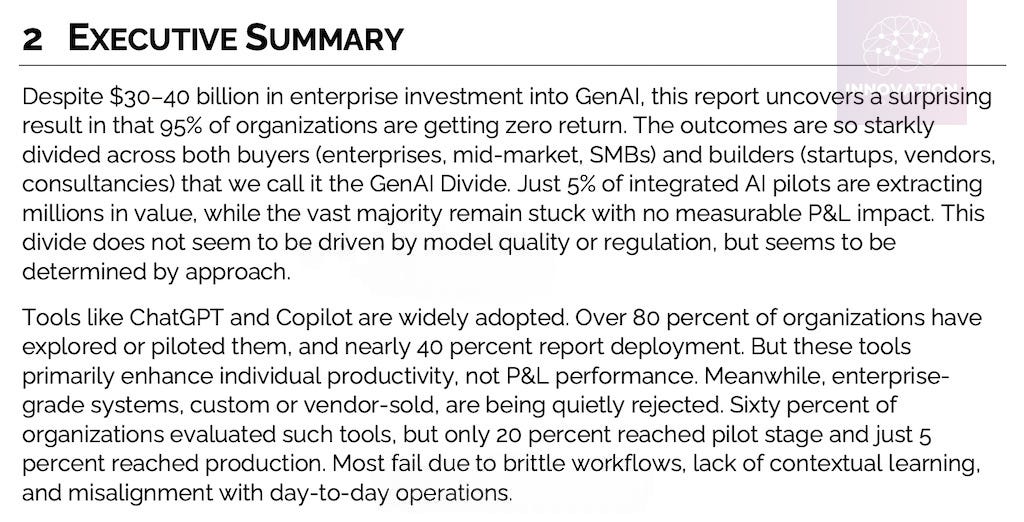
Zooming out even further reveals a striking statistic: according to recent research, 95% of corporate AI pilots fail. This happens despite the fact that most employees already use individual AI tools like ChatGPT in their daily work.
The failure point is the corporate layer — team-level usage.
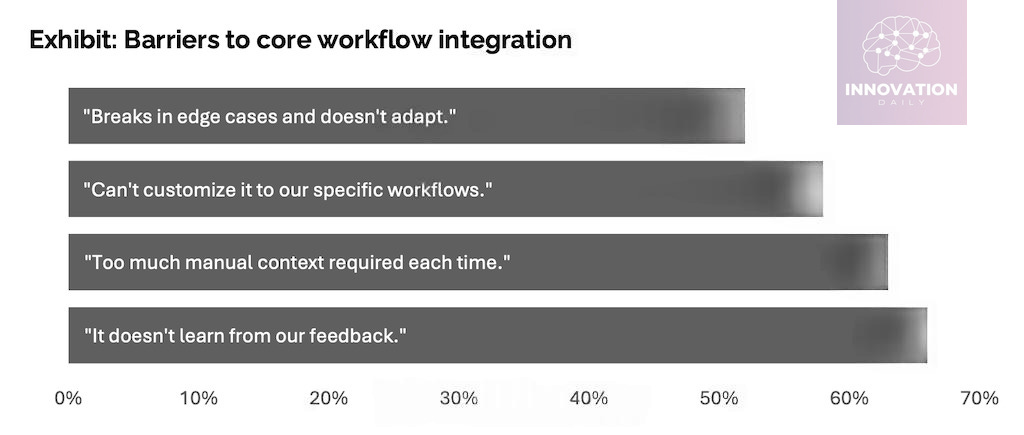
When asked about the biggest barrier, companies say: “AI doesn’t learn from our feedback.”
From a corporate perspective, learning from feedback must happen across the entire organization. Otherwise, you don’t get corporate AI — just a collection of isolated personal assistants.
If AI systems could accumulate experience from all employees, they would learn at a rate proportional to company size. That’s dramatically faster than any individual usage model — and a clear path to competitive advantage.
Key Takeaways
AI is still primarily an individual productivity tool, customized user by user.
The next step is adapting AI for team and organizational use — from small teams all the way up to large enterprises. This shift delivers clear benefits:
eliminating duplicated AI work and unnecessary costs,
transferring human experience across teams,
accelerating AI learning using examples from everyone.
This transition has already begun — and it’s shaping the next major trend.
The real direction forward is building team-specific AI platforms designed to solve specific problems in specific domains. And there’s no shortage of those domains — teams exist everywhere and work on everything.
So the real question is:
In which area do you already feel the need for shared AI memory?
Where could team experience dramatically improve AI output?
What kind of knowledge should be captured — and how should it be reused?
These are the right questions to ask right now. The space is still young — which means there’s still time to jump in before someone else figures it out.
Company Info
Grov
Website: grov.dev
Total Funding: no info